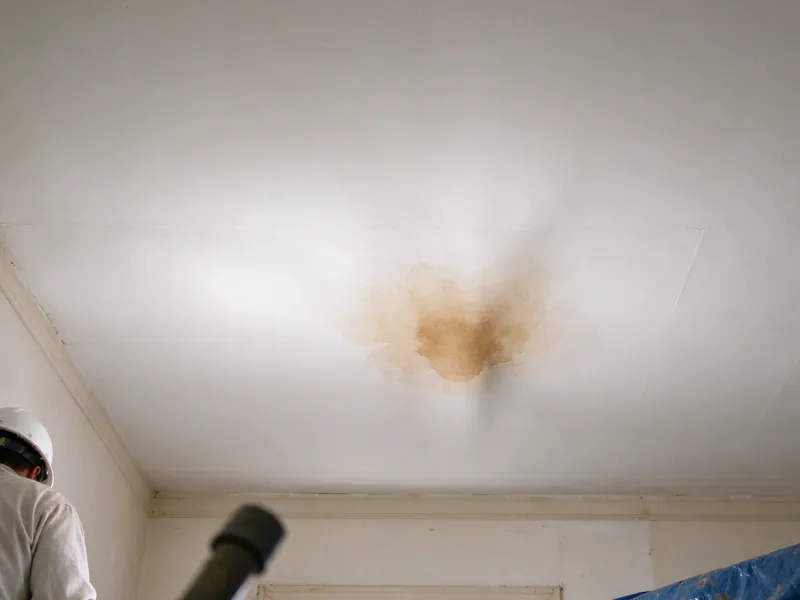
Slate Repiping Columbus repairs known water leaks in houses and small buildings across Columbus and nearby Franklin County communities, from a spreading ceiling stain to a wet wall or a pipe that is visibly dripping. This page is for the leak you already know about: water is showing somewhere, and the job is to stop it, trace it to the source and fix it, while keeping the damage it caused documented for insurance and cleanup. The work is carried out by licensed and insured plumbing contractors.
If you suspect a leak but cannot see where, such as a high bill or a meter that keeps turning, start with water leak detection instead. If a pipe has split and water is pouring out, go straight to burst pipe repair and shut the main.
Stop the water first
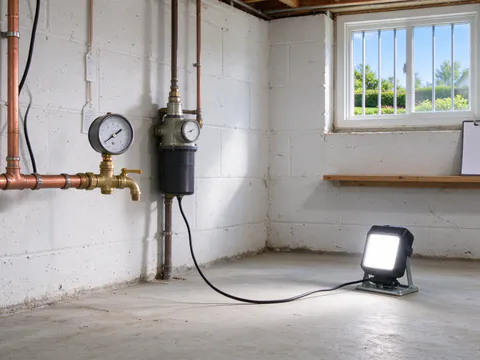
Every leak gets smaller once pressure comes off the line. If the leak is at a fixture, such as under a sink or behind a toilet, the small stop valve on that supply line may be enough. If it is in a wall or ceiling, or the stop will not close, shut the main. In most Columbus houses the main shutoff is in the basement near the inside water meter.
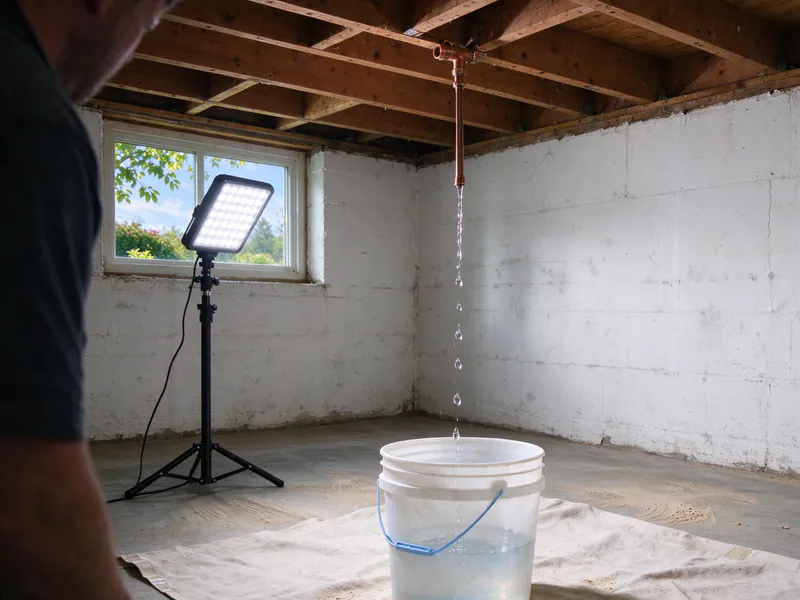
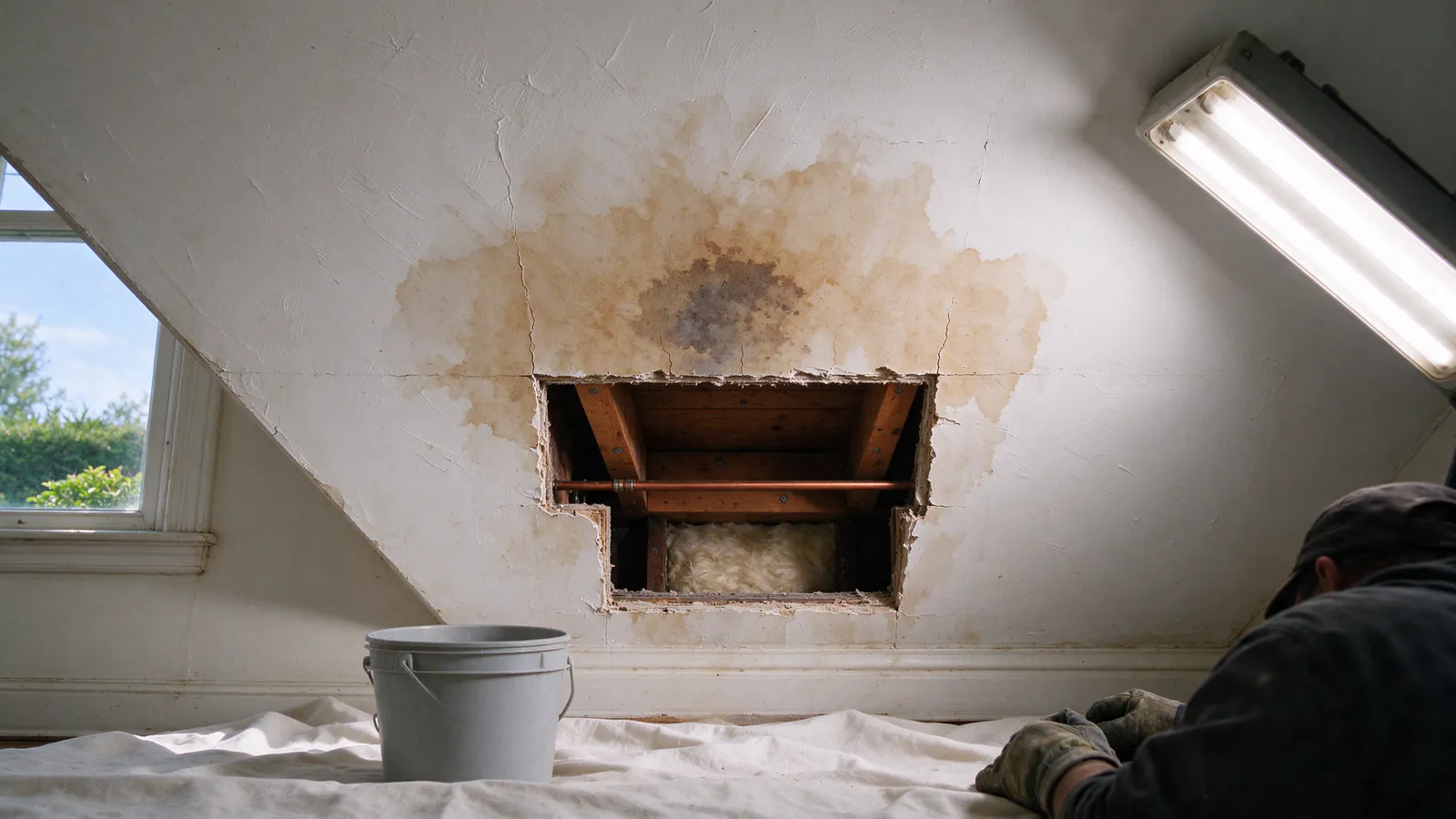
Water in a ceiling near a light fixture, or dripping near outlets or the electrical panel, is a safety issue. Keep clear of it and turn off that circuit from a dry spot, or call an electrician. A ceiling that is sagging with water can come down; a bucket underneath and a small hole at the lowest point can let it drain in a controlled way.
Then take photos of the stain, the wet area and anything damaged before cleanup starts. Those photos matter later. Emergency calls for active leaks are answered around the clock, and the emergency pipe repair page covers what an urgent visit does when water will not stay stopped.
Is it the supply line or a drain?
The most useful single question about a known leak is whether it comes from the pressurized supply side or from the drain side. They are different systems with different repairs, a distinction the guide to whether repiping includes drain pipes also draws.
A supply leak runs all the time. It wets the ceiling whether or not anyone is using the bathroom above, and the water meter keeps moving with everything off. Common sources are a pinhole in copper, a rusted galvanized joint, a failed fitting, a supply hose to a toilet or faucet, or a valve stem leaking where it was last turned.
A drain or fixture leak happens only when water goes down a drain. The stain grows after a shower or a flush and stays the same otherwise. Sources include a drain joint, a toilet wax ring, a shower pan, a tub overflow gasket or failed grout and caulk. Those repairs are plumbing or tile work but not supply repairs, and patching a supply line beneath them will not stop the stain.
Reading a ceiling stain
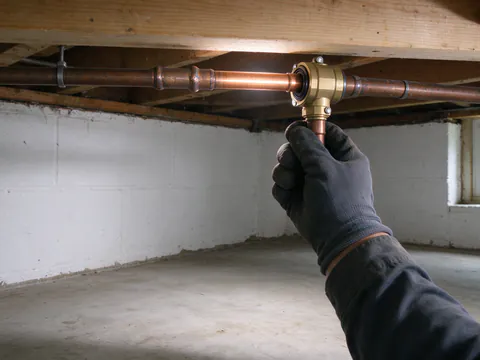
In a Columbus house with a full basement, 51.4% of homes by the County Auditor’s records, many supply leaks show first in the basement ceiling where the mains run. Stains on a first-floor ceiling usually sit below a bathroom, a kitchen or a laundry. The water often travels along a joist or the top of a plaster lath before it shows, so the stain can be a few feet from the source. A stain that dries between uses is pointing to a drain; one that stays wet is pointing to supply.
Water showing in a ceiling or wall?
Shut off the water and take photos. Then describe where it is and when it started, and the source is traced before anything is cut.
Finding the source and opening the right spot
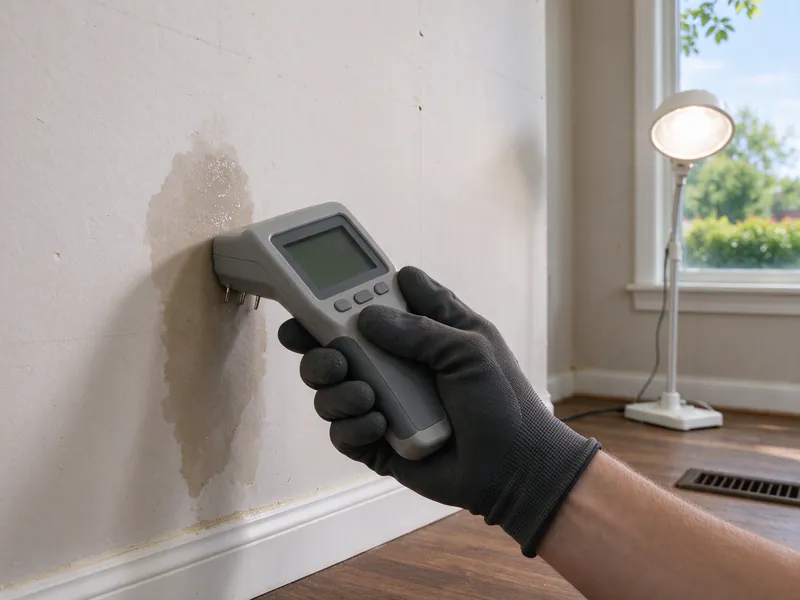
Once the water is off, the source is traced from the stain toward the nearest fixture or pipe run above it. Running water through one fixture at a time, with the supply back on briefly, shows which use makes it worse. Turning the supply back on with fixtures off shows whether it leaks under pressure alone. Where the source still is not clear, the isolation and pressure tests described on the leak detection page narrow it down.
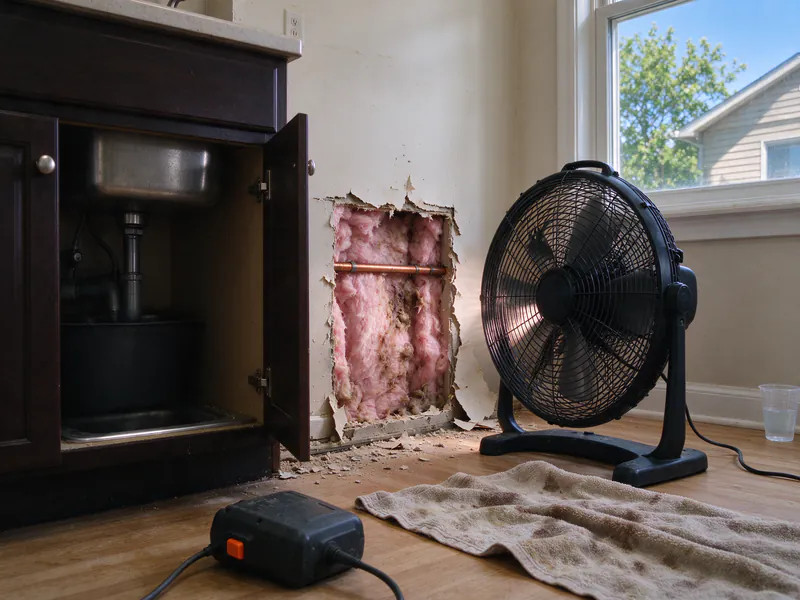
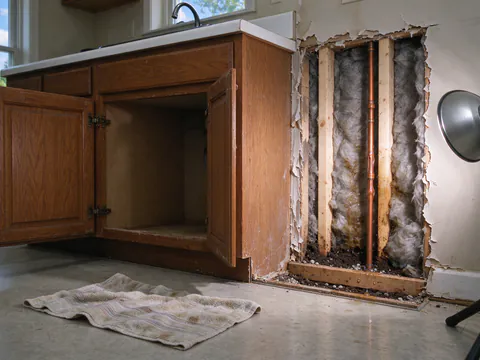
The aim is one opening, in the right place, big enough to repair through. Cutting blindly at the middle of a stain often means a second and third opening. An access panel can sometimes go behind a tub or below a bathroom so the same spot can be reached again.
The repair
What happens next depends on what failed. A supply hose or a fixture stop is replaced. A leaking joint or short section is cut out and remade, as described on the pipe repair page. Copper with a pinhole is repaired back to full-wall tube, and the copper pipe repair page explains how the cut section is read for the cause. Every repair is pressure checked before the opening is closed.
The repair also tells you something. A single failed fitting on otherwise sound pipe is the end of the story. A pinhole in copper that already has two patches, or a galvanized joint that crumbles when touched, means more leaks are likely, and the repipe vs repair guide helps weigh the next step.
Sudden leak vs wear
Water damage and insurance are where homeowners most often get caught out. Many homeowners policies cover water damage that is sudden and accidental, such as a pipe that bursts or a fitting that lets go, and exclude damage that builds up over time from a slow leak, seepage or wear and tear. The pipe itself is often excluded either way; the policy may pay for the ceiling but not for the plumbing repair. Policies vary a great deal, and the homeowners insurance guide explains the general distinction without speaking for any insurer.
What helps a claim is evidence: photos from before cleanup, the failed part kept, and a written note from the repair stating what failed and, where it can be judged, whether it looked sudden or long-running. That note is part of the repair, not an extra.
Drying and restoration are separate work
Fixing the leak does not dry the house. Wet drywall, plaster, insulation and subfloor need to dry properly or mold can follow, and that is the work of a water damage restoration company with drying equipment. Closing the opening in plaster or drywall is usually a separate trade again. The repair scope should list which openings it makes and whether it closes any of them, so nobody assumes someone else is doing it.
What a leak repair depends on
There is no flat price. It depends on where the leak is and what has to open to reach it, the pipe material, whether the leak turns out to be supply or drain, whether a shutoff has to be replaced so the house can be isolated, and how many trips tracing it takes. Repairs in an exposed basement ceiling are short. Repairs above a finished ceiling or behind tile take longer and leave a patch, and that patch should be in writing.