Nearly one service line in three in Grandview Heights is galvanized on the owner’s side, one of the highest shares anywhere in the Columbus water system’s inventory. Most of those lines serve the city’s older houses, and those houses are where Slate Repiping Columbus concentrates its galvanized pipe replacement and whole-house repiping in Grandview Heights and Marble Cliff. Each repipe, in PEX or copper, is carried out by licensed and insured plumbing contractors once the City has issued the permit and the County has approved the plans.
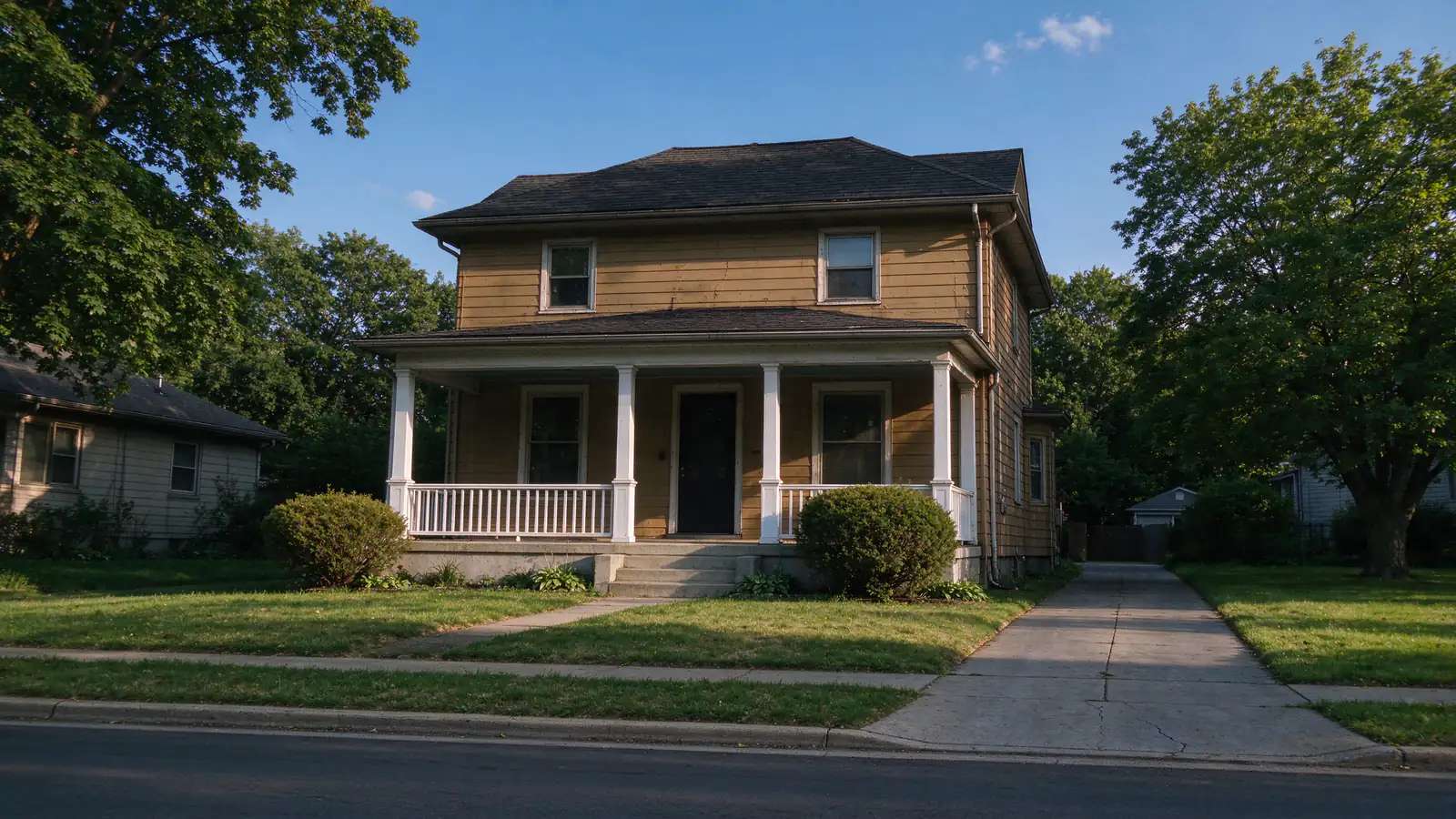
The number makes sense once the housing is split in two. On Census figures, 42.4% of Grandview’s homes were built before 1940 and 34.8% after 1980, and only 8.0% between 1940 and 1959. The newer group, which includes the condominium buildings, was built with copper or plastic. The older group is where the galvanized question lives: prewar houses on the side streets off Grandview Avenue, plumbed in an era when galvanized steel was the standard supply pipe.
What the inventory says about Grandview’s lines
The Columbus service line inventory has 2,616 records inside Grandview Heights. Of those, 810 (31.0%) are galvanized on the customer’s side and 728 (27.8%) carry the label “galvanized requiring replacement”. Another 225 are lead on the utility side and 572 are listed as unknown. By comparison, the share of owner-side galvanized lines is 7.7% in Upper Arlington and 14.5% in central Clintonville.
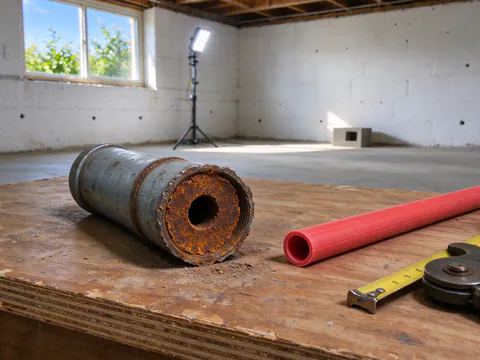
A galvanized service line is buried outside the house, and its material does not prove what is inside. Still, a house that was given a galvanized line before the December 1963 ban was likely plumbed in galvanized as well, and much of that pipe may still be in service unless someone has replaced it. Galvanized steel corrodes from the inside, which narrows the pipe and can send rust to the taps after the water sits. The guide to whether galvanized pipes are safe covers both the flow and the water quality side.
Prewar houses, two stories, full basements
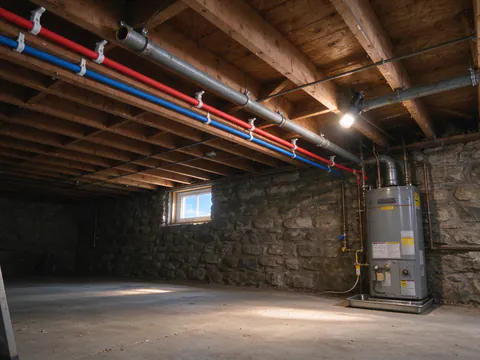
The County Auditor’s dwelling records for Grandview Heights show 76.3% of homes with a full basement and 70.2% at two stories or more. About one card in ten lists two to four living units. That profile shapes how a repipe runs. The basement gives an open path for the new main, the water heater connection and branches to the kitchen and laundry. The second floor is the harder part: lines have to climb through an interior wall, a stacked closet or a chase, and older walls are often plaster.
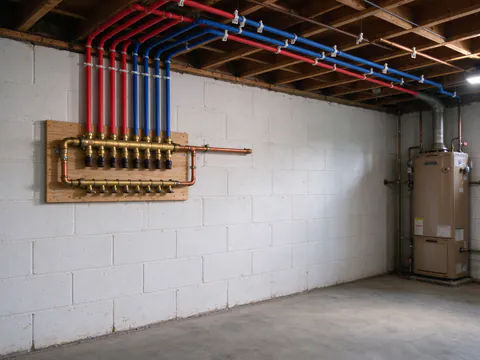
Openings are cut where the route needs them and patched afterward, and every new line is pressure tested before anything closes. In a two-family house, the scope first establishes which unit each line feeds. The how invasive is repiping guide explains how wall work is kept to what the route requires, and PEX repiping describes the flexible material that often reduces the number of openings in an older house.
Columbus water is lime-softened to about 5.7 to 7.3 grains per gallon with a pH around 7.8, according to the City’s water quality report. That is moderately hard, and inside old galvanized pipe the scale and rust build up together. A repipe removes the restriction in the pipe itself, though water pressure also depends on the service line and the fixtures, so new pipe alone is not a promise of stronger flow. The Columbus water pressure and hard water guide explains the difference.
Galvanized on your inventory record?
A walk-through starts at the meter, confirms the service line material and maps how much galvanized is still feeding the house.
Permits: the City first, then the County
Grandview’s Building and Zoning office takes permit applications online, and its Building Official signs off on construction for the city. For plumbing, the City contracts with Franklin County Public Health, whose staff check the drawings and later inspect the new pipe. A rule that took effect on February 9, 2026 makes the County’s approval notice part of the City application, with the same number of fixtures on each. A hose bibb or laundry box left off the drawing becomes a revision, so the fixture list gets counted early. The Columbus-area repiping permit guide sets this beside the process inside Columbus; the building department quotes current fees.
Paying for the service line
Because Columbus Water & Power sends the water bill in Grandview, owners here qualify for LEAP. The program lends up to $10,000 at 0% as a lien deferred until sale, and it asks for three quotes, a contractor certified for service lines and registered with the City, and a signed three-party agreement before any digging. Street-by-street replacement inside Columbus is a separate program; for suburban customers, Columbus leaves notice to the local government, and its map counts 27 signed work agreements within Grandview’s limits. The water line replacement page covers private service line work.
Marble Cliff
The Village of Marble Cliff, on Grandview’s western edge, is small: 441 housing units on Census figures, 40.1% built before 1940 and 21.8% in buildings of two to four units. County records show 58.3% of homes with a full basement and 27.3% with some crawlspace, so crawl access comes up more often here than in Grandview. The inventory shows 193 service line records, with 16.6% galvanized on the owner’s side.
The Grandview Heights Building Official serves Marble Cliff too. Marble Cliff did not appear on Franklin County Public Health’s 2025 plumbing contract list, so who reviews and inspects plumbing at a Marble Cliff address is confirmed before the permit is filed rather than assumed. Water comes from Columbus Water & Power, which makes LEAP available on the service line.
Pricing a repipe here
A second story, plaster walls and a second unit each push a Grandview house higher within the typical Columbus-area range of $4,000 to $15,000+ for a whole-house repipe, and larger multi-bath, copper or complex homes run higher still. The repiping cost guide explains each driver.
Around Grandview
Upper Arlington to the northwest shares the County plan review step. Clintonville to the northeast and the Hilltop to the southwest are inside the City of Columbus, with its own permit. The service areas page has the full list.