When an apartment building’s pipe fails, it fails for everyone who lives on that riser at once. Slate Repiping Columbus offers repiping for apartment buildings of four or more units and small commercial spaces in Columbus and nearby Franklin County communities, carried out by licensed and insured plumbing contractors under the multi-family or commercial permit. Two and three unit houses are handled on the double and duplex repiping page, because the code, the permit and the planning are different.
Columbus has a lot of this building stock. Census figures put 32.0% of the city’s housing units in buildings of five or more units, and close to half in the 43201 ZIP covering Victorian Village, Italian Village, the Short North and the University District. Older walk-ups in those neighborhoods were plumbed in galvanized steel or early copper, and many have had decades of unit-by-unit repairs that left a patchwork behind the walls.
What the building survey covers
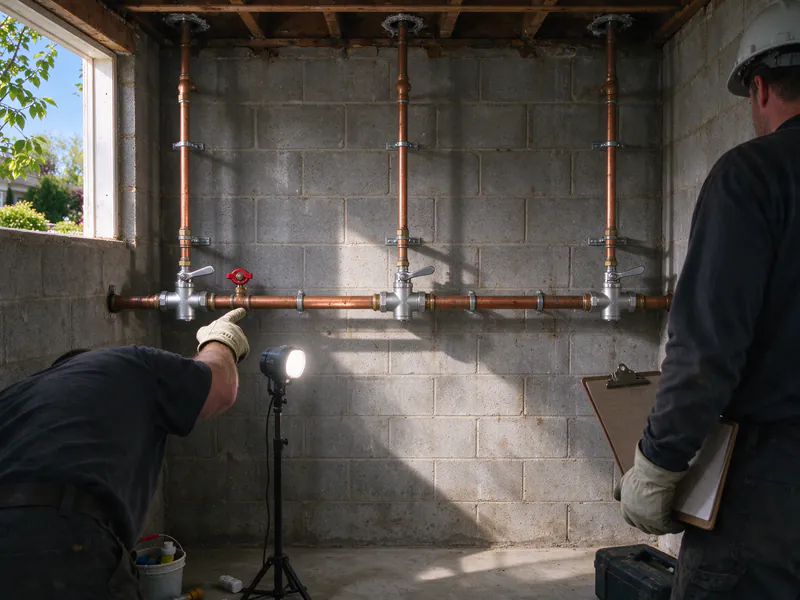
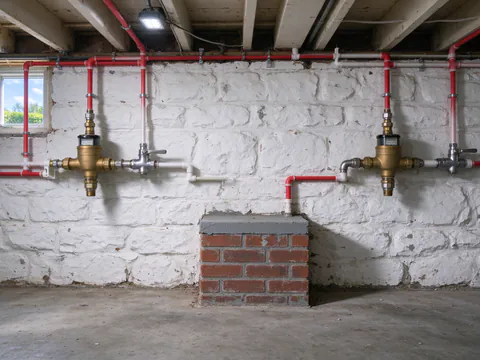
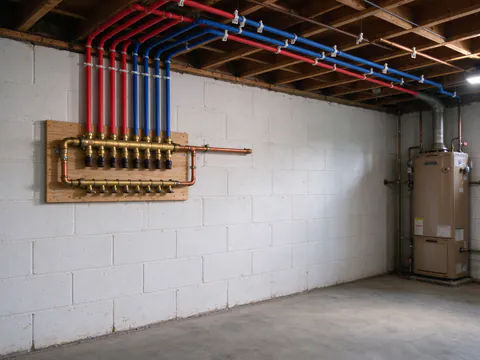
A building repipe starts with a survey, not a quote. It begins where the service enters, usually a mechanical room or basement, and records the meter, main shutoff, backflow device if there is one, water heaters or boiler and any booster or recirculation pump. From there it follows each main to the risers, the vertical lines that carry water up through the floors, and records where each riser runs, which units it serves and whether it has a shutoff.
Inside a sample of units, the survey looks at the branch lines from the riser to the fixtures, whether each unit can be isolated, and how the walls and ceilings are finished. It also gathers anything on paper: old drawings, repair records and any notes from a past inspection. Pressure and flow are measured at the top floor with fixtures running, since that is where a restricted riser shows first, though weak flow there can also start at the service or a pressure-reducing valve, as the low water pressure page explains. The result is a drawing of the existing system that becomes the base for the new one.
Risers and stacked units
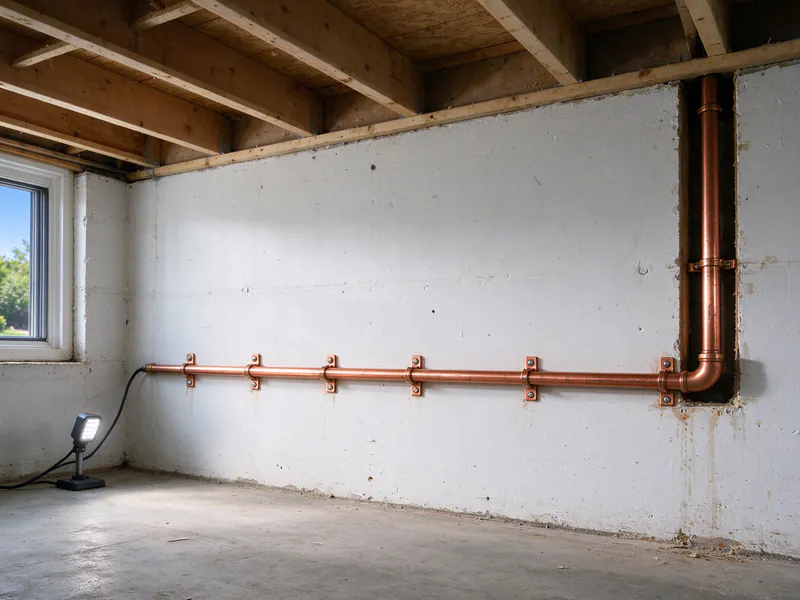
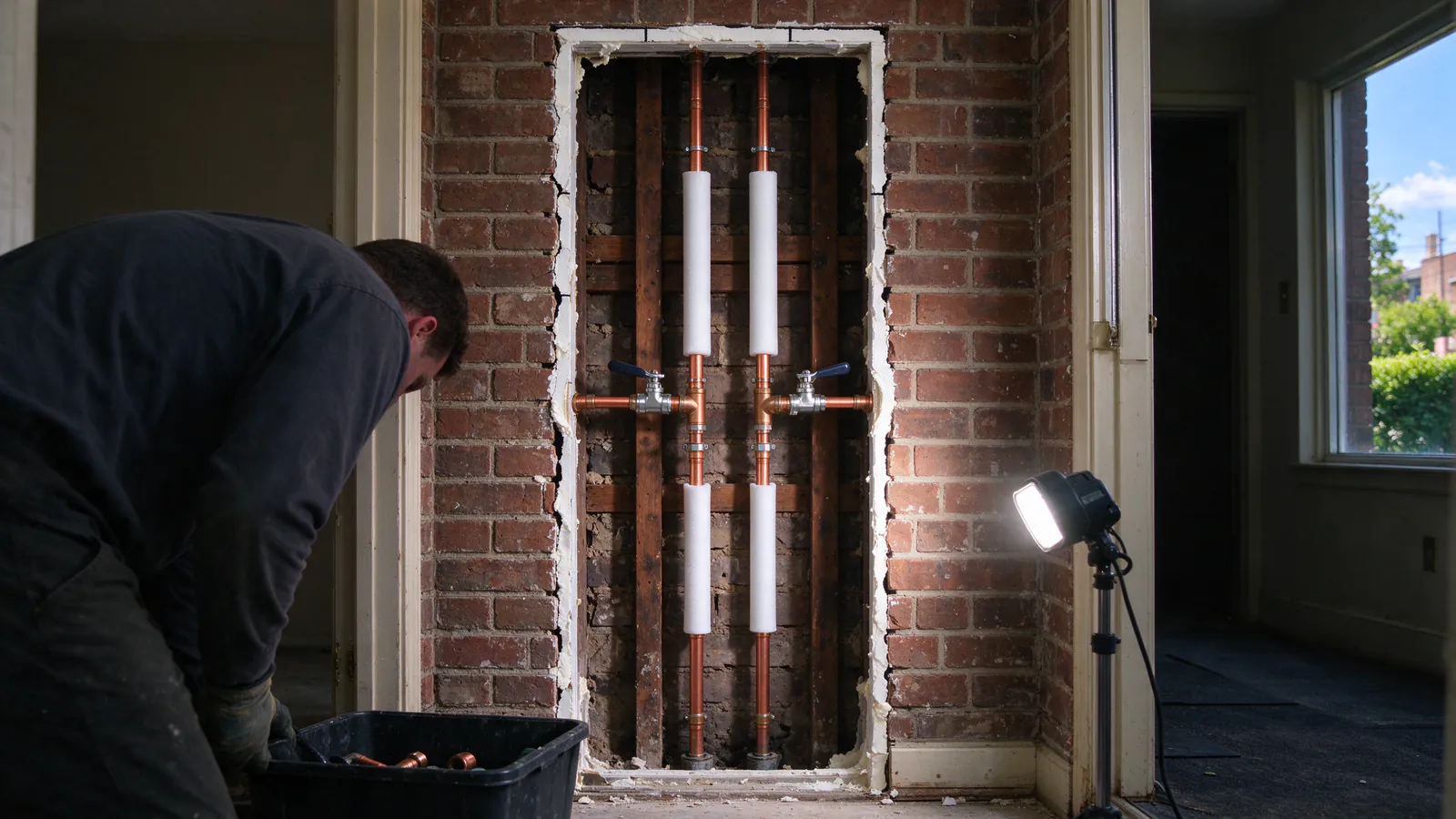
Risers are usually the core of a building repipe. In a three or four story walk-up, a pair of hot and cold risers may serve a stack of kitchens or bathrooms one above another. Replacing a riser affects every unit on it, so the work is organized stack by stack: the new riser is run beside the old one, each floor’s branch is connected, and the old riser is cut out or abandoned in place.
Access decides the order. Where risers run in a chase opened from the corridor or a closet, units are disturbed little. Where they run inside a kitchen or bathroom wall, each unit on the stack has an opening, and the scope lists which units, which wall and who closes it. Each riser gets its own isolation valve at the bottom so a future repair to one stack does not shut down the building.
Unit branches and shutoffs
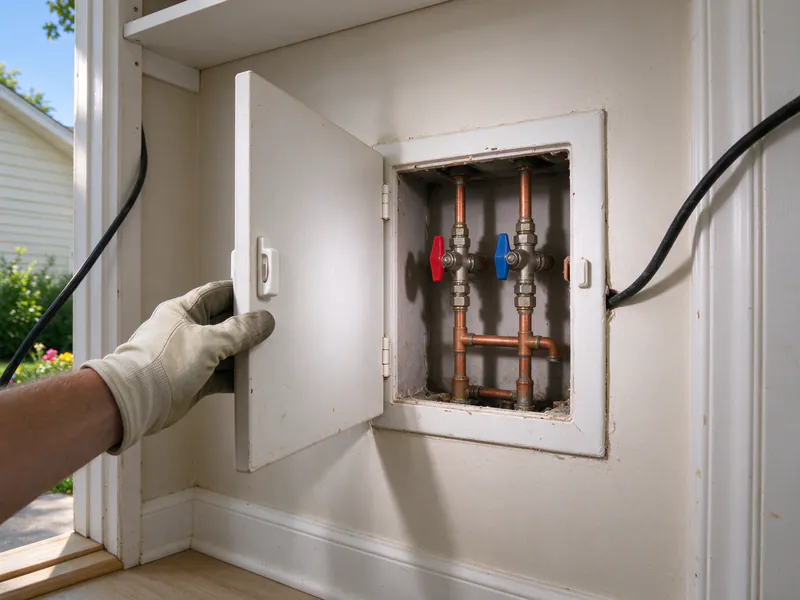
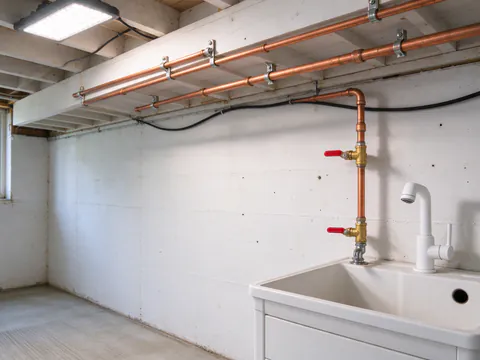
Ohio’s amendments to the plumbing code call for a shutoff valve for each unit in multi-unit buildings other than 1, 2 and 3 family homes. Many older Columbus buildings were built without them, so one leaking toilet supply means shutting a riser or the whole building. A repipe adds a shutoff at each unit where the branch leaves the riser, and fixture stops inside the unit. The branches themselves can be laid out trunk-and-branch or from a small manifold, as the manifold vs trunk-and-branch guide explains.
Building on old risers?
The survey maps every riser, the units it serves and where it can be reached.
Working around the people inside
An occupied building is repiped in phases. New risers and branches are run while the old ones still carry water. Each stack is then cut over on a set day, with the water off for part of that day, and units on other stacks keep their water. Every household gets written notice before each shutdown, with the date, the expected window and which rooms will have open walls. Notices are posted in common areas as well as delivered to each door.
The people living in the building also need a contact for questions and a clear sequence for access to their units. Work areas are kept to the rooms named in the notice, protected with drop cloths and dust containment, and cleaned at the end of each day. The guide to how long a repipe takes covers typical phasing for a house; a building multiplies those days by its stacks.
Small commercial spaces
The same approach applies to a storefront with apartments above, a small office building or a mixed-use block. A business usually needs its shutdowns outside opening hours, and a restaurant or salon may have water heating and fixtures sized well beyond a household’s. Where a commercial space and apartments share a main, each gets its own shutoff, and the shutdown plan accounts for both.
Material choice in a larger building
The Ohio Plumbing Code lists copper, PEX and CPVC for water distribution in larger buildings too. Copper is common for mains and risers, especially where pipe passes through fire-rated floors with established firestop details, and where exposed runs in a mechanical room need to stay rigid. PEX is common for unit branches, where fishing tubing through finished walls saves openings. Many building repipes combine the two, and PEX repiping covers the tubing and fitting choices. The PEX vs copper guide and the copper repiping page cover the tradeoffs.
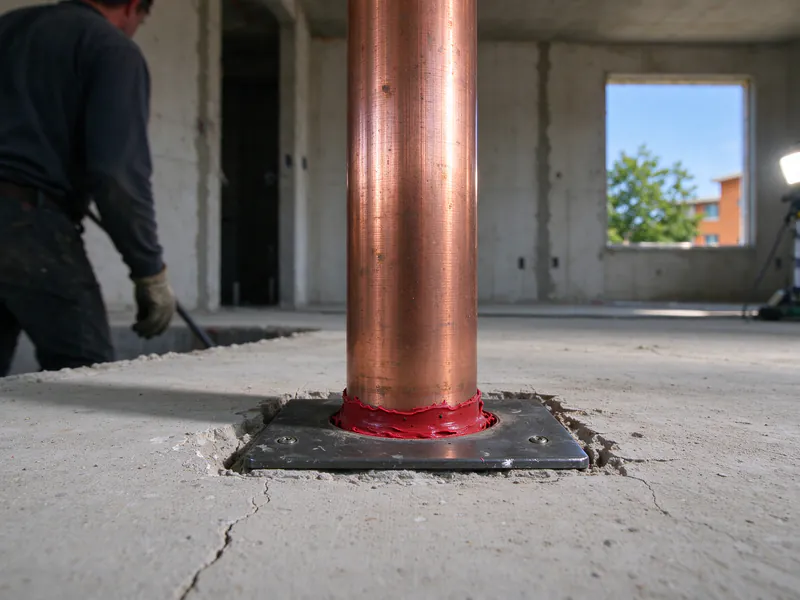
Wherever new pipe passes through a fire-rated floor or wall, the opening is sealed with a listed firestop system matched to the pipe material and size.
Permit, plan review and inspections
Inside the City of Columbus, a building of four or more units or a commercial space takes the multi-family and commercial plumbing permit: $550 with one inspection or $700 with two. Each additional inspection trip is $225, which matters on a phased job where risers are inspected as they are finished. The City’s published guidance adds independent plan review when an existing water supply system is replaced in a commercial or multi-family building, so drawings come before the permit.
In suburbs that contract with Franklin County Public Health, the city issues the permit and the County reviews the plan, and since February 2026 the plan review’s fixture count has to match the permit application. The County’s plan review fee is $135 plus $80 an hour, with a half-hour minimum. The Columbus repiping permit guide lists which office covers which city. Each riser is pressure tested before its chase closes, the system is flushed, valves are labeled by unit and riser, and the drawing is marked up to show what was built. There is no published Columbus price range for building repipes; unit count, risers, access and phasing set the price, as the repiping guide explains in its section on buildings with more than one household.