Slate Repiping Columbus replaces all of the water supply piping in Columbus houses, doubles and small buildings, and in nearby Franklin County communities. A whole-house repipe takes every hot and cold line out of service from the main shutoff to the fixtures and replaces it with PEX or copper, under one plumbing permit and one set of inspections. The work is carried out by licensed and insured plumbing contractors, and the job is planned around the walls, the people living in the house and the permit office that covers the street.
Whole-house is the right scope when the problem is the pipe itself rather than one bad spot. Galvanized steel corrodes from the inside along its whole length, and copper that has started pinholing in one run is often the same age, alloy and water as the rest. Replacing one section at a time leaves old pipe beside new for years, with a new set of openings each time. If one bathroom or one floor is clearly the problem, a partial repipe may be the better answer, and the Columbus repipe cost guide shows how the two compare.
What happens on the first visit
The first visit starts where the water enters the house. In most Columbus homes that is the basement wall near the inside water meter, which is also where the service line, the main shutoff and the first few feet of house piping meet. The walk-through notes what each of those is made of, because a galvanized or lead service line can limit flow on its own and belongs to a different program.
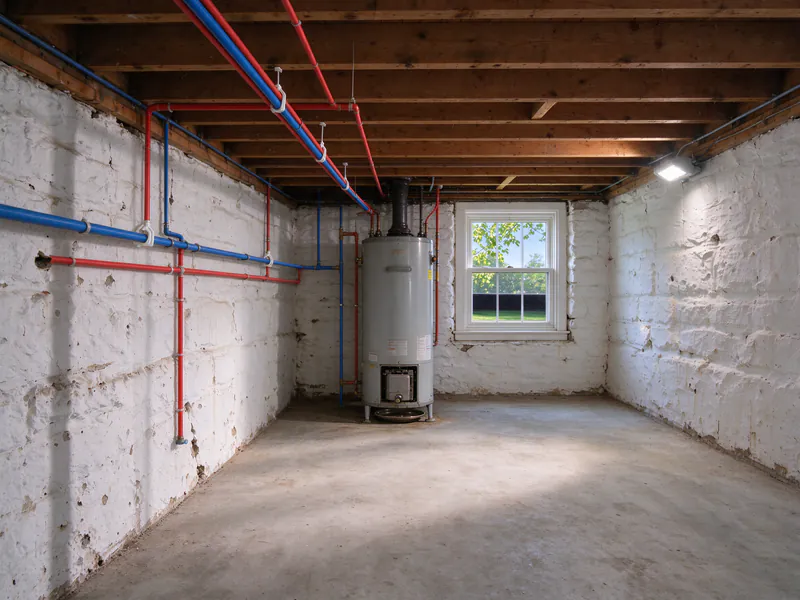
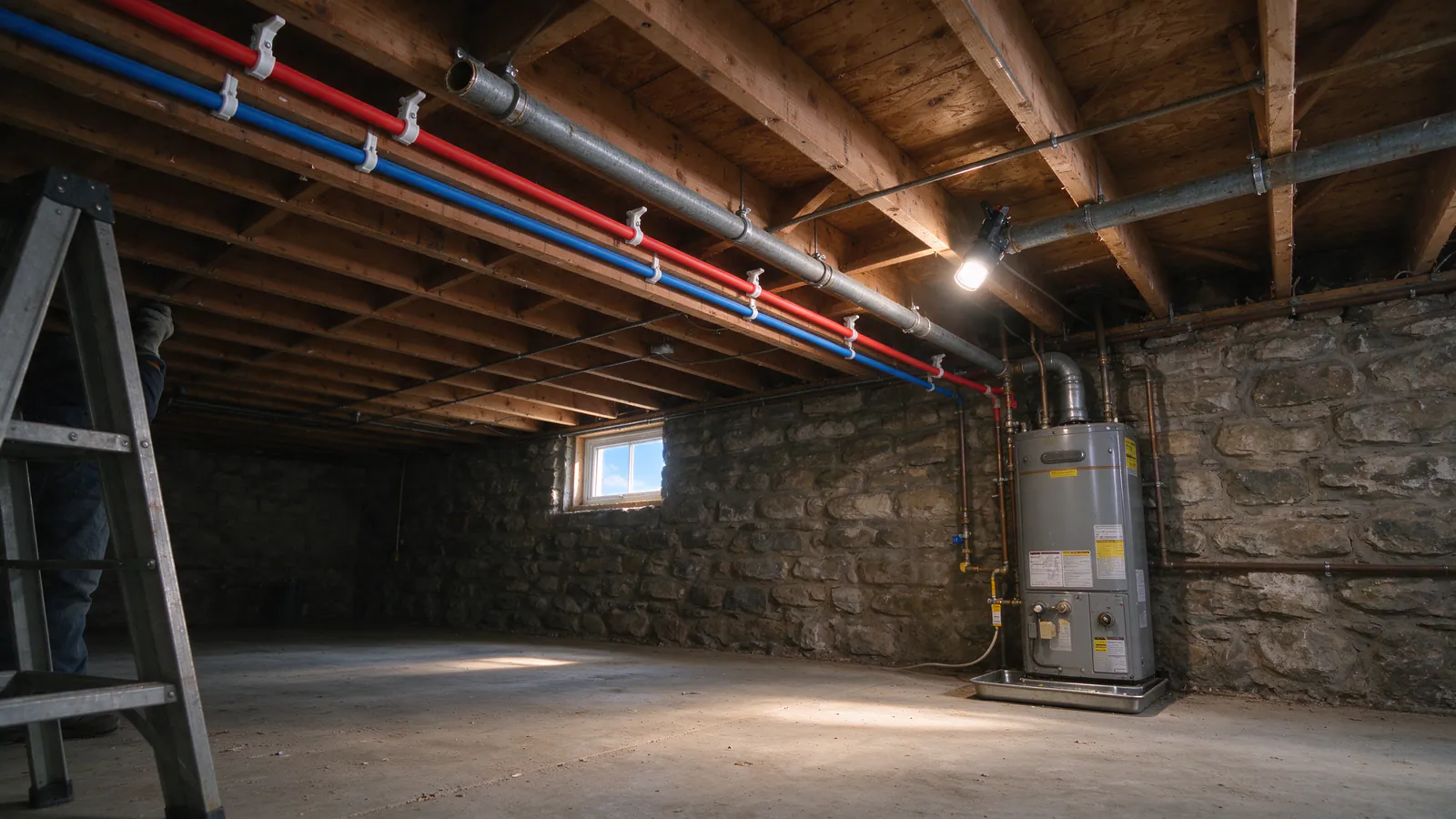
From there it follows the main to the water heater and up to each fixture group: kitchen, baths, laundry, hose bibbs. It records the pipe material on each run, where earlier repairs already changed it, and how the new lines could travel. Open basement joists, a laundry chase, stacked closets and the back of a kitchen cabinet are the routes that save plaster. Where a wall would have to open, the plan marks it.
Pressure and flow are checked so the repipe is not blamed for a street problem: static pressure at a hose bibb or test point, and flow at the highest fixture with a second tap running. The visit ends with a written scope that lists the material, the openings, what old pipe stays, the permit and how the water will be shut off.
Why Columbus supply piping wears out
Columbus is younger than many Midwest cities. Census figures put 12.0% of its homes before 1940, but the share runs far higher in the inner neighborhoods: more than half of the homes in the 43206 ZIP around German Village, and more than 40% in Bexley and Grandview Heights. Houses from that era were usually plumbed in galvanized steel, and many still have some of it.
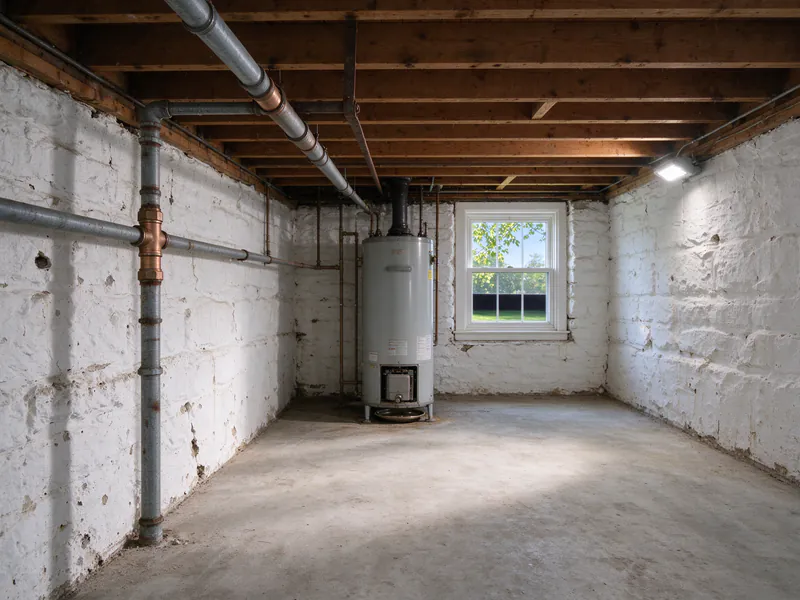
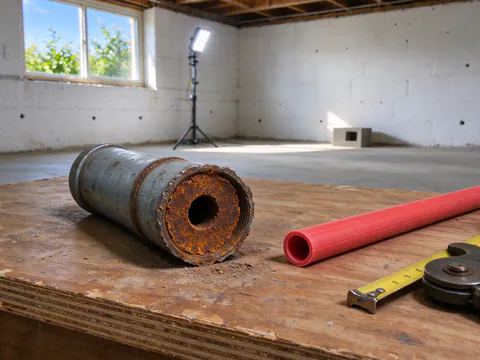
Galvanized pipe fails from the inside. The zinc coating wears through, the steel rusts, and scale builds on the wall until the bore is a fraction of its size. The outside can look fine while the upstairs shower fades every time a toilet refills. Threaded joints go first because the threads cut away part of the wall, so a corroded nipple at the water heater or a rusty fitting in the basement ceiling usually says something about the rest.
Copper ages differently. Pinhole leaks have several causes, including water chemistry, flow velocity and how the original joints were made, and the copper pinhole leak guide goes through how to read them. Columbus lime-softens its water to about 5.7 to 7.3 grains per gallon and adds a zinc orthophosphate corrosion inhibitor, according to the City’s water quality report. That treatment protects pipe walls, which is one reason a single pinhole does not prove a whole copper system is failing. Lead solder was banned in home plumbing in 1986, so copper joined before then can carry lead at the joints, and some homeowners repipe for that reason alone.
None of these symptoms proves one cause. Low pressure can come from the service line, a half-closed valve, a failing pressure-reducing valve or clogged aerators, which is why the low water pressure page starts at the meter and why a repipe is never sold as a guaranteed pressure fix.
PEX or copper, and how the layout is chosen
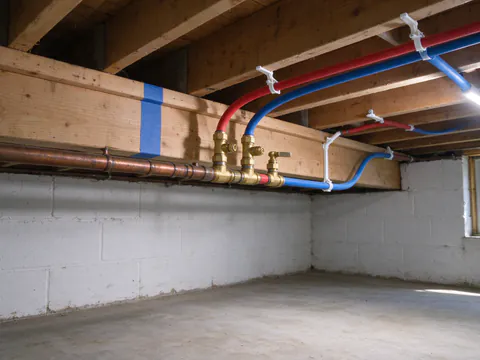
Both materials are allowed under the Ohio Plumbing Code, and neither is right for every house. PEX bends around joists and through bored holes, so long runs need fewer fittings and fewer openings, which matters in a plastered house. Copper suits runs that stay exposed in a basement or utility room and owners who prefer metal pipe. The PEX vs copper guide sets out the tradeoffs, including cost: copper mill prices rose about 30% over the past year in the Bureau of Labor Statistics producer price index, while plastic pipe rose about 4 to 5%.
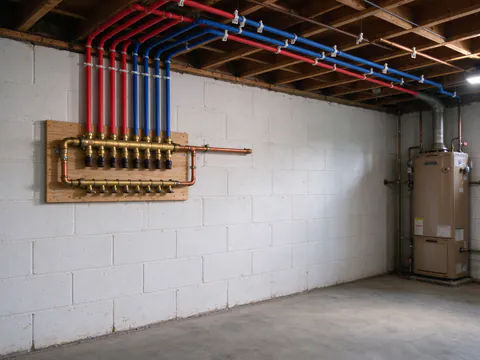
PEX can be laid out two ways. A trunk-and-branch system runs a main line with branches to each fixture, much like the old pipe did. A home-run manifold gives each fixture its own line from one panel of valves, which uses more tubing but lets one fixture be shut off without the rest. The manifold vs trunk-and-branch guide explains where each fits.
Old pipe in a Columbus house?
Start with a written scope: what gets replaced, where the walls open and what the permit covers.
Openings, water shutoffs and living in the house
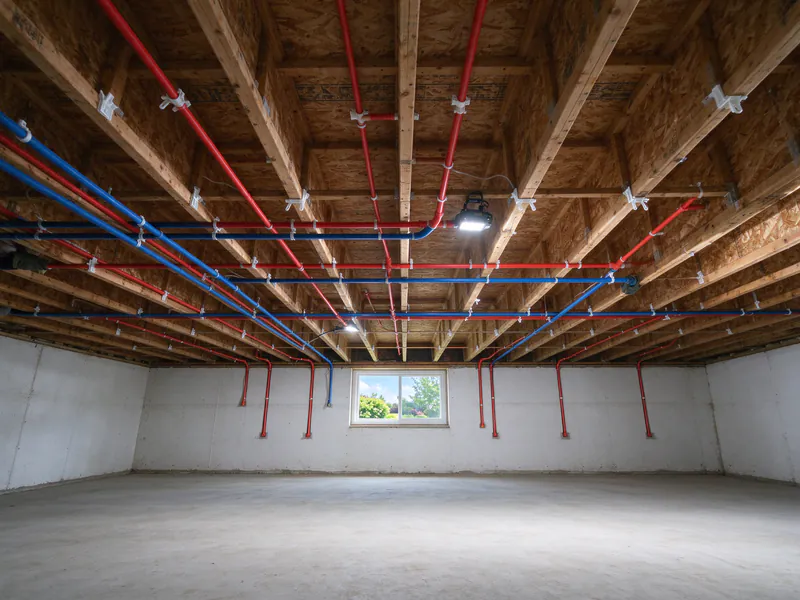
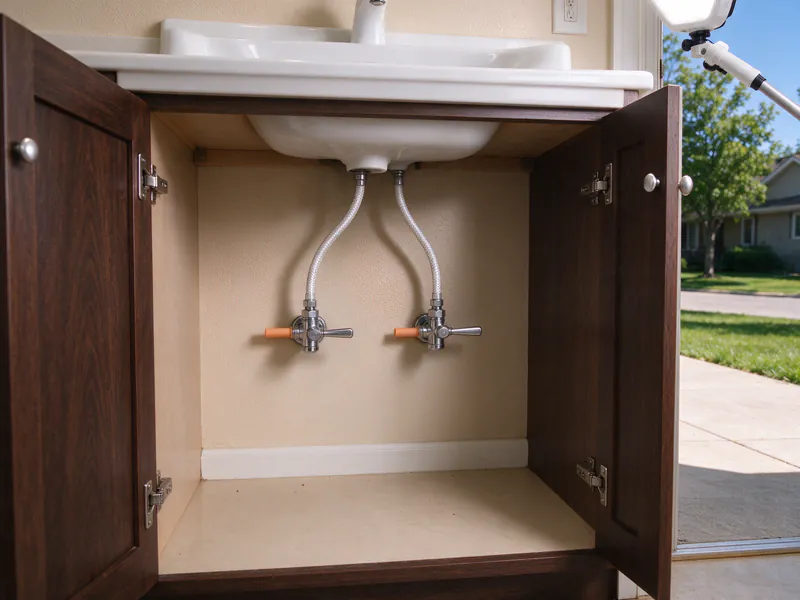
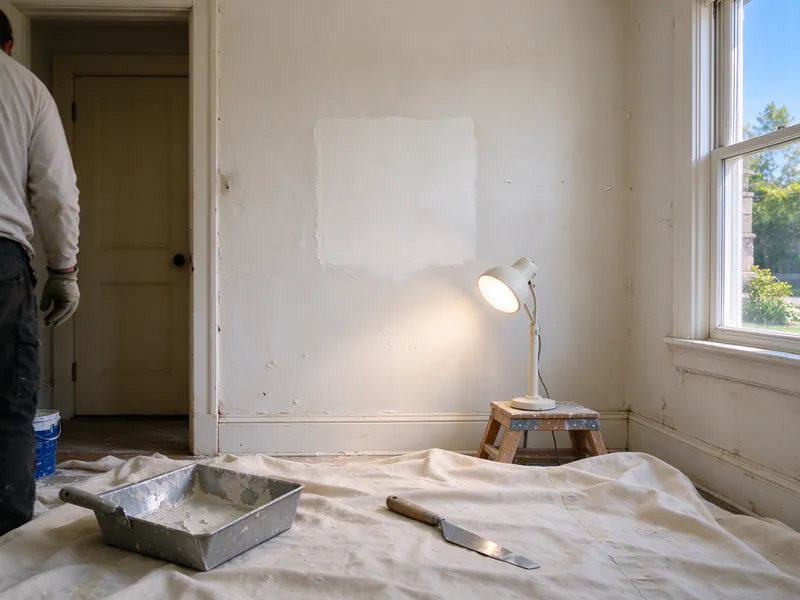
Most of a Columbus repipe happens in the basement. The County Auditor’s records show 51.4% of Columbus homes with a full basement and much higher shares in the older ZIPs, so the new main and many branches run along exposed joists. The openings come where pipe has to climb: behind a kitchen sink, beside a bathtub, in a closet below an upstairs bath. Each one is listed in the scope with its size and who closes it, because patching plaster or drywall is a real part of the price and the part most often left vague.
Water is shut off in stages. New lines are run while the old ones are still in service, then each fixture group is switched over, so the house usually has water at the end of a working day. The guide to how long a repipe takes covers a typical schedule, and how invasive repiping is covers what to move out of the way.
Permit, inspection and testing
A whole-house repipe needs a plumbing permit. Inside the City of Columbus, Building and Zoning Services issues it, and a permit for a 1, 2 or 3 family home costs $275 with two inspections. The permit is pulled by a plumbing contractor licensed by the State of Ohio and registered with the City, or by an owner doing the work on a single-family home they live in. In many suburbs, including Upper Arlington, Bexley and Grandview Heights, the city issues the permit and Franklin County Public Health reviews the plan and inspects the work. The Columbus repiping permit guide covers which office handles which street.
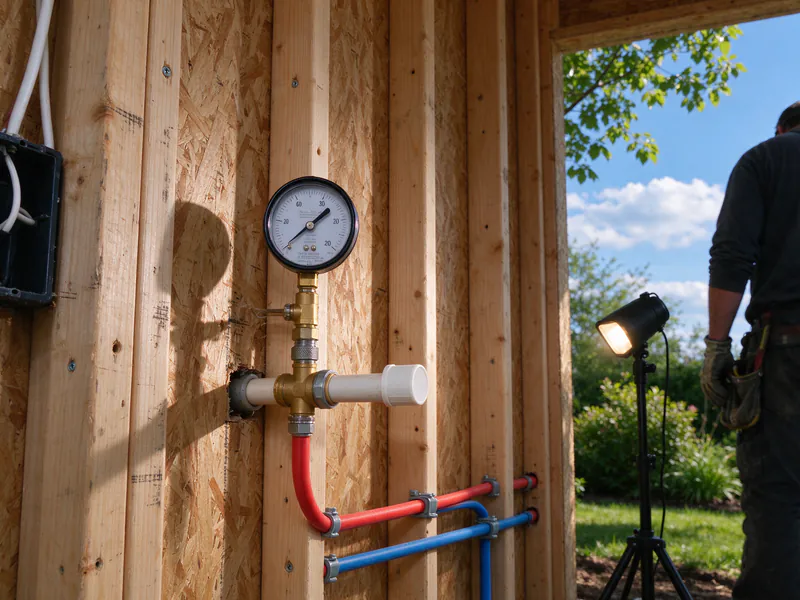
Before walls close, the new piping is pressure tested and checked for leaks, then flushed so debris from the cutover clears the aerators and the water heater. The inspector sees the work while it is still visible. Shutoffs at the main and at each branch are labeled so the next person who needs them can find them.