On the Hilltop, the reason to look at the pipe inside the walls is as likely to arrive with the City’s lead service line program as with a leak. Owners facing that choice across the Hilltop, Westgate, West Columbus, Highland West and Franklinton can plan the inside of the house with Slate Repiping Columbus, which offers galvanized pipe replacement and whole-house repiping timed around the City’s street crews. The work is done by licensed and insured plumbing contractors on a City of Columbus permit.
Columbus’s project map shows 1,821 signed work agreements in ZIP 43204, more than any other ZIP in Columbus, and part of the West Side sits in a dedicated Hilltop work-agreement area. When a street comes up, the City replaces both sides of each lead or galvanized service line, the buried pipe from the main to the house. What it does not touch is everything past the basement wall, and that is the decision this page is about.
What the City replaces, and where it stops
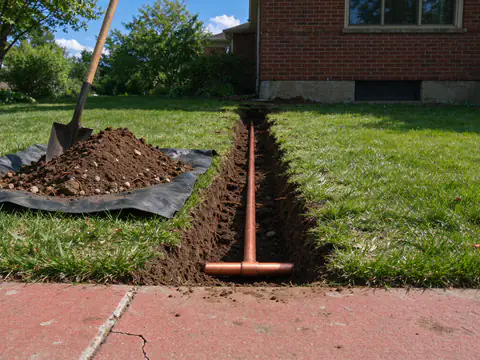
Street by street, the City’s program replaces lead and galvanized service lines on the public and private side during a project planned to run about twelve years. Inside its scheduled areas the work is free to the owner while funding lasts. Before crews can replace the private side, the owner listed with the County Auditor has to sign a work agreement. The Columbus lead service line program guide explains the agreement and the notices that come before it.
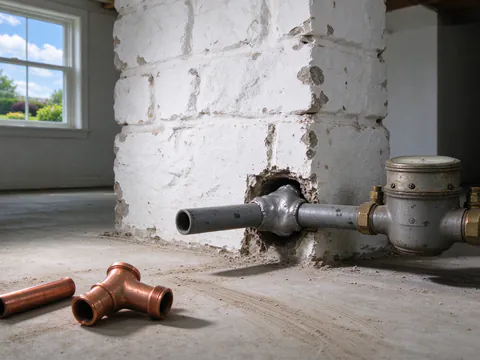
The program’s own description is clear on the boundary: interior lead hazards are not replaced. That leaves galvanized supply pipe, old brass valves and joints made before lead solder was banned in 1986 exactly where they were. A house can come out of the street work with a new copper service line connected to a meter and then to steel pipe that is sixty or more years old.
Reading the 43204 inventory
In 43204, the service line inventory shows 23.5% of lines galvanized on the owner’s side and 25.0% lead on the City’s side. Columbus stopped allowing new lead or galvanized service lines in December 1963, so a galvanized service line points to a house plumbed before then, and often to galvanized pipe inside. On Census figures, 26.1% of homes in 43204 were built before 1940 and another 25.3% between 1940 and 1959.
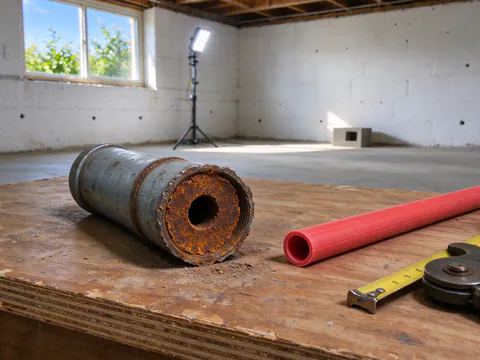
A service line record does not prove what is in the walls. It is still the most useful free clue, and the basement usually settles it. Threaded joints and gray pipe that a magnet sticks to are galvanized steel. The guide to rusty water from pipes explains how to tell whether discoloration is coming from inside the house or from the street.
Is your street on the City's list?
A walk-through maps the interior pipe from the meter so the house side is ready to schedule around the City's crews.
Sequencing a repipe around the street work
There are three workable orders, and each has a cost in coordination rather than in money. Repiping first means the interior pipe is new and the connection at the meter is ready when the City’s line arrives. Doing both close together keeps the water shutoffs to a short window. Waiting until after the City’s work is fine too, as long as the repipe replaces the old pipe right up to where the new service line enters. The one outcome to avoid is a short stub of old galvanized left between two new systems, because it keeps shedding rust into both.
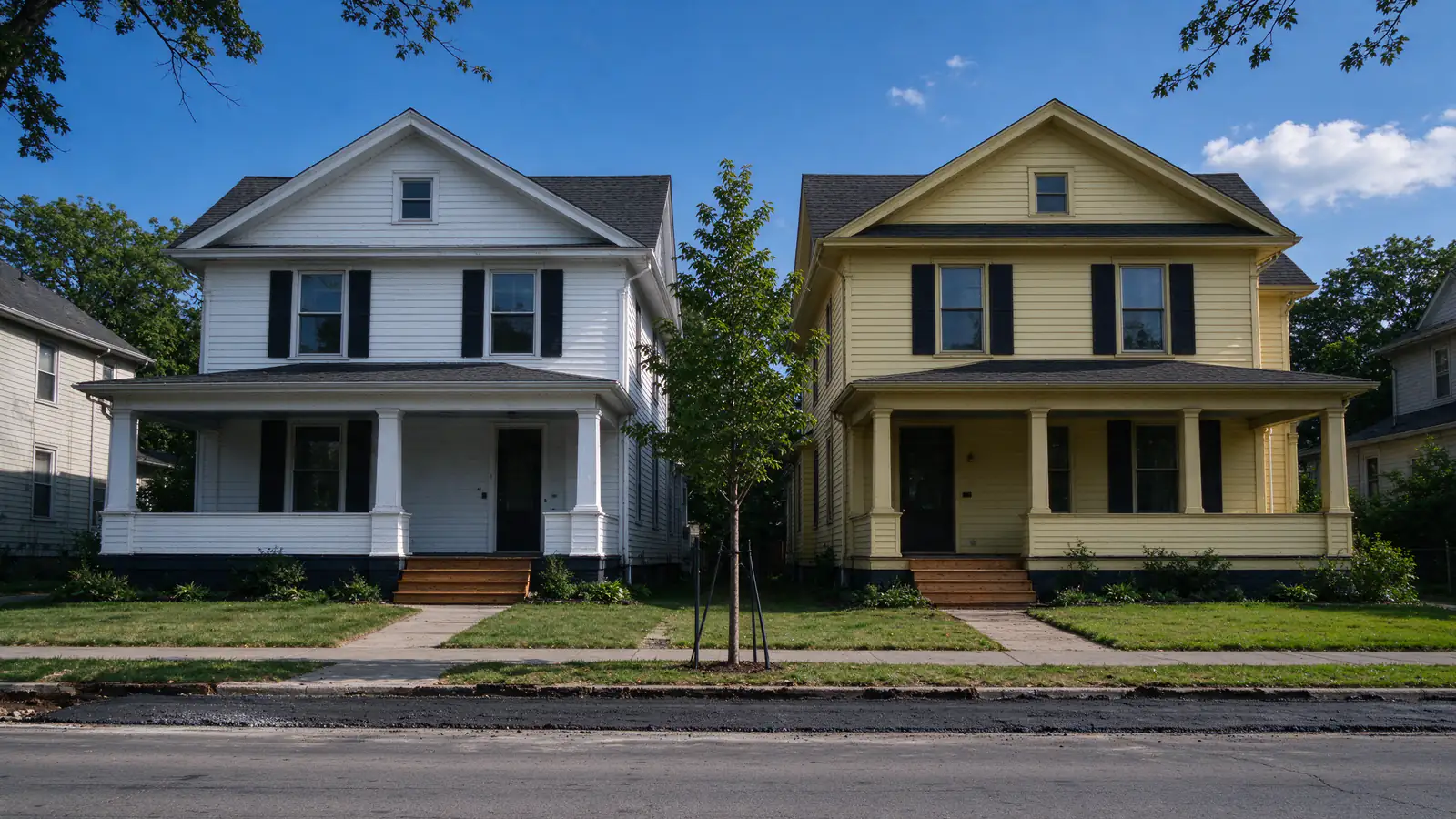
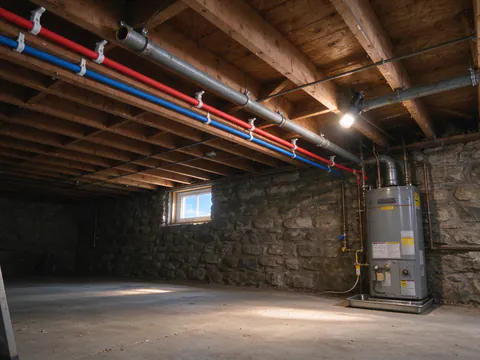
Most Hilltop houses make the interior work fairly direct. On Auditor records for Columbus-city parcels in 43204, 75.6% have a full basement and 51.5% are one story, so the main runs along open joists and many fixtures sit just above it. Two-story houses need a route to the upstairs bath, usually through a closet or a stacked wall, and the how invasive is repiping guide covers how those openings are kept small and patched. Every repipe ends with a pressure test of the new lines before walls close.
Frost is the other routing question. Outside, a service line is meant to sit below the City’s 32-inch frost depth; inside, the risk shifts to supply pipe along a porch wall or into an unheated addition. Moving those runs to heated space is part of drawing the new layout.
Franklinton
East of the Hilltop along West Broad Street toward the Scioto River, Franklinton has the older housing of the two. In ZIP 43222, 56.3% of homes were built before 1940. Auditor records for its Columbus-city parcels show 79.7% at two stories or more, 27.2% with some crawlspace and 21.5% with two to four living units. Its inventory shows 20.4% of lines galvanized on the owner’s side and 31.8% lead on the City’s side.
Those figures describe tall, narrow houses and doubles where the route upward and the split between households drive the scope. Where a rear addition sits over a crawl, that space needs its own access plan, and a double needs a clear line on which pipes feed which unit. The commercial and multi-unit repiping page covers buildings with more than two households. The small village of Valleyview, next to the Hilltop, shows an even higher galvanized share in the inventory, but it is a separate jurisdiction and its permit office is confirmed per address.
Owner-paid replacement and LEAP
An owner whose street is not yet scheduled can replace the service line privately. The City’s own estimate for owner-paid replacement outside its schedule is about $6,000 to $10,000. Its LEAP loan offers up to $10,000 at 0% to any Columbus Water & Power customer, as a deferred lien repaid at sale, with three quotes, a contractor certified for service lines and registered as a City vendor, and a three-party agreement signed before work begins. It does not reimburse work already done. The lead service line replacement page and the service line cost guide cover the details.
Permit and price on the West Side
Inside the City of Columbus, Building and Zoning Services issues the plumbing permit and inspects. The fee for a 1, 2 or 3 family home is $275 with two inspections, and the City logged 652 residential plumbing permits in 43204 and 334 in 43223 from 2023 through 2025. Work on the service line itself needs a City of Columbus water contractor license.
On price, the house decides more than the neighborhood does: a whole-house repipe falls in a typical Columbus-area range of $4,000 to $15,000+, and larger multi-bath, copper or complex homes run higher. The repiping cost guide explains the drivers.
Close by
Across the river, German Village has the second-highest count of City work agreements. To the north, Grandview Heights and Upper Arlington buy Columbus water but run their own permits. The service areas page lists the rest.