The City of Columbus is replacing lead and galvanized water service lines, on both the public and private side, street by street over about 12 years, with lead-free copper. When construction reaches a street, the City intends to cover the one-time cost for owners who sign its work agreement, as long as funding lasts. Slate Repiping Columbus is not part of the City’s program; this guide explains how it works so owners can plan around it, and the lead service line replacement page covers the cases where an owner hires a contractor instead.
What the program replaces
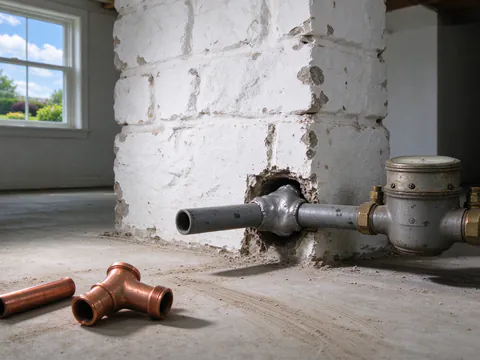
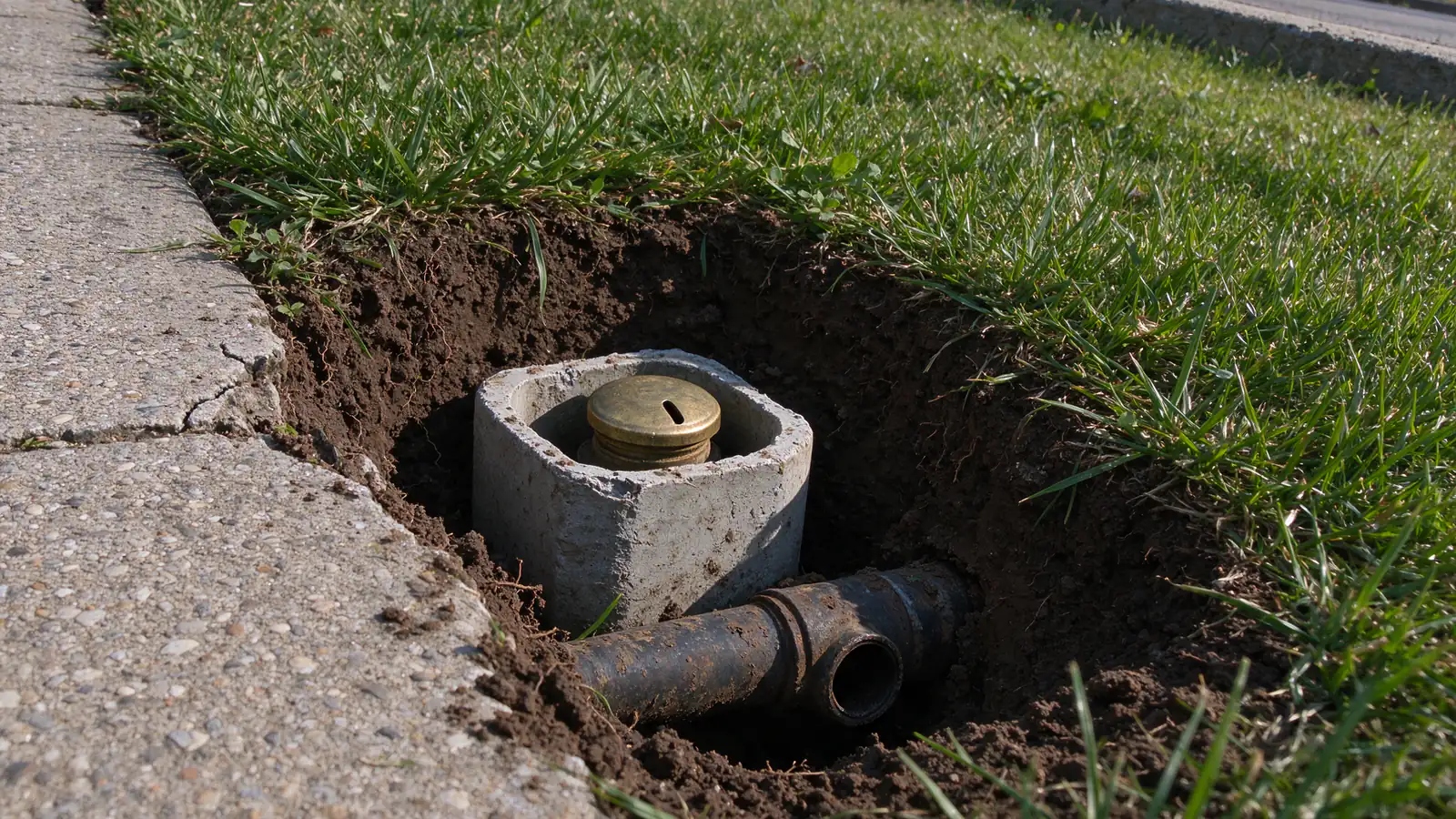
The program replaces the whole service line when it is lead or galvanized: the public side from the main to the curb stop and the private side from the curb stop to the meter, usually inside the basement. The new line is lead-free copper. Galvanized lines are included because galvanized pipe downstream of lead can collect lead and because the pipe itself corrodes and leaks.
Scale explains the timeline. The City says roughly 20% of its service lines may contain lead components, and its map shows possible lead or galvanized lines at 50,000 to 60,000 homes. Within city limits, the inventory lists 10.7% of lines as lead on the utility side and 6.9% as galvanized requiring replacement.
What it does not replace
The program ends at the meter. The City says it does not replace lead hazards inside the home. In an older Columbus house those can include:
- Lead solder on copper joined before 1986, when lead solder was banned in home plumbing.
- Brass valves and fittings, which could contain up to 8% lead until 2014.
- Galvanized house pipe in the basement and walls, which can hold lead it collected from a lead service line upstream.
That inside work is a repipe, not a service line job. Galvanized pipe replacement and whole-house repiping cover it, and the galvanized pipe safety guide explains why galvanized matters once the line outside is copper.
How the schedule works
The City schedules replacement by area, not by request. Its stated priorities include the concentration of lead and galvanized lines, disadvantaged community status, homes with children under 10, blood lead levels and other capital projects in the street. Work runs through several pathways: infrastructure maintenance, emergency repair, street-by-street replacement, and schools and daycares. Areas are ranked from Priority 1 to 5.
The City’s project map shows 55 project areas, including three joint Public Service and Public Utilities projects running from April 2025 to May 2028 and work-agreement strategies in the Hilltop and Driving Park. About 7,644 work agreements had been signed across the map, with the largest counts in the 43204 ZIP around the Hilltop (1,821) and 43206 around German Village (1,072). City sources give two end dates for the effort, 2037 for the federal requirement and 2040 in the water quality report, and some owners have reported scheduled work arriving later than first expected. Treat the schedule as a plan that can move.
Federal rules sit behind the deadline. The US EPA’s Lead and Copper Rule Improvements, finalized in October 2024, require water systems to identify and replace lead pipes within 10 years.
The work agreement
Before the City replaces the private side, the owner has to sign a work agreement, and only the owner listed with the Franklin County Auditor can sign it. If no agreement is signed and the City cannot replace the line, the owner is left to replace it at their own cost.
On the day of the work, the City says to plan for about six to eight hours without water. Because the private side ends at the meter inside the house, it helps to clear the basement area in front of the meter and the wall where the line comes in.
Leaks, emergencies and LEAP
Until construction reaches a street, a leak on the private side is the owner’s responsibility. City code declares lead and galvanized-requiring-replacement service lines a public nuisance and prohibits repairing a lead service line, so a leaking lead line means replacement. The water line replacement page covers how the buried line is dug or pulled.
The Lead Elimination Assistance Program (LEAP) fills that gap. It is open to any property owner with a Columbus Water & Power bill and covers lead or galvanized lines, whether leaking or not. It is a 0% loan up to $10,000, recorded as a lien and repaid in one payment at sale or a cash-out refinance, or within 99 years. The owner chooses a contractor certified for water service line work and registered with City vendor services, collects three quotes (with fewer than three, the loan is capped at $4,000), and signs a three-party agreement before a notice to proceed. Income-qualified owners with a leaking line can have it replaced free. Work done before the agreement is not reimbursed. The lead service line replacement cost guide covers the money in more detail.
Street not on the schedule yet?
Find out what the line is made of and what the options are before anything is signed or dug.
Checking the City’s map
The City publishes its service line inventory map and a program page with project areas. Look up the address and note three things: the utility-side material, the customer-side material and whether the street sits inside a project area. An “unknown” listing is common and does not mean lead; it means nobody has confirmed the material.
Then check the pipe at the meter. The guide to identifying pipe material shows how: lead is dull gray, soft enough to scratch shiny with a key, and not magnetic; galvanized is gray, threaded and magnetic; copper is the color of a penny. Lines installed after Columbus’s December 1963 ban on new lead and galvanized service lines are unlikely to be either.
Suburbs and the program
The inventory covers Columbus and the suburbs where Columbus runs full water service, such as Upper Arlington, Grandview Heights and Whitehall. Some work agreements have been signed in those cities. Bexley, Gahanna, Reynoldsburg and Obetz buy water through master meters and are largely missing from the Columbus inventory map, and Westerville runs its own water system. Bexley has its own inventory and a galvanized service line loan for owners in its sewer remediation work. The City says customers outside its limits will be notified by their local municipality, so check with the city that sends the water bill.
Timing an interior repipe around the City’s work
If the house also needs its inside pipe replaced, the order matters.
- Before the City arrives: a repipe can go ahead, ending at the main shutoff after the meter. The new interior pipe connects to whatever service line is there, and the City later connects its new copper line at the meter.
- After the City finishes: the house has a new copper service line feeding old interior pipe. Flow may still be poor if galvanized house pipe is choked, and rust can keep showing up. A repipe then finishes the job.
- At the same time: coordinating with a City crew’s schedule is hard to control, so most owners plan the repipe to come before or after rather than overlap.
The permit for the inside work comes from Building and Zoning Services in Columbus, or from the suburb with Franklin County Public Health review; the Columbus repiping permit guide covers both. Anyone buying a house with old pipes can check the inventory map before closing.