PEX is the flexible plastic tubing in most repipes done in occupied houses, because it bends around joists and through bored holes where rigid pipe would need another elbow and another opening. Slate Repiping Columbus offers PEX repiping across Columbus and the nearby Franklin County suburbs, from a single bathroom group to a whole-house repipe. The work is carried out by licensed and insured plumbing contractors under the plumbing permit for the address.
The word PEX covers more than one product. There are different tubing types, at least three fitting systems and two common layouts, and each choice changes how many fittings sit inside the walls, how the system shuts off and how the house goes back together. This page walks through those choices. The PEX vs copper guide covers the material decision itself, and the guide to whether PEX is safe covers the drinking-water questions.
What the walk-through looks for in a PEX job
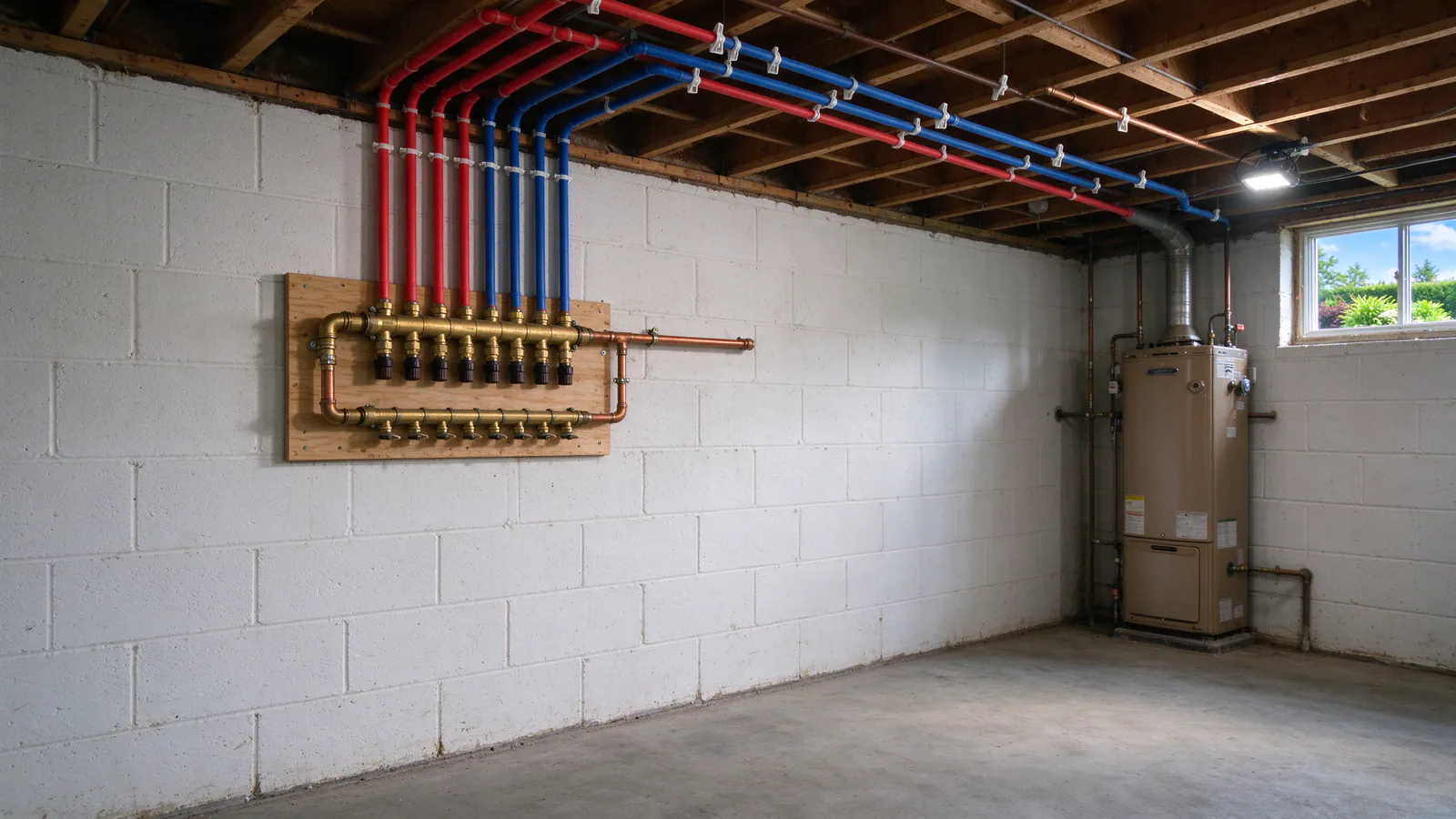
The visit starts at the main shutoff, usually in the basement near the inside water meter in a Columbus house, and works out to each fixture group. For a PEX job it pays attention to things a copper job would treat differently: where a manifold board could hang near the water heater, which joist bays run toward the stacked bathrooms, and which walls are exterior, because tubing should stay out of cold cavities.
It also notes everything the new tubing will connect to. The water heater, the meter-side piping, any copper that stays, the washer box and the outdoor faucets all need a listed transition. Static pressure and flow are measured so the owner knows what the street supplies before the job starts, since a new system of the same size will not raise the pressure that arrives at the meter; the low water pressure page covers the other causes. The scope then names the tubing type, the fitting system, the layout and the openings.
PEX-A and PEX-B
The letters describe how the polyethylene is crosslinked during manufacturing, which changes how the tubing behaves on the job. Both are made to the same ASTM tubing standard and both are listed for hot and cold drinking water.
PEX-A is the more flexible of the two. It holds tighter bends without kinking, and a kink can often be closed by heating the tube, which matters when tubing is being fished up a wall cavity and cannot be seen. PEX-B is stiffer and holds a straight line along a joist. It is widely available and usually costs less per foot.
Neither is the right answer for every house. A brick house with plaster walls and a climb through a closet chase rewards flexibility. A ranch with an open basement and short drops to each fixture does not. What matters more than the letter is that tubing and fittings belong to one listed system, installed to that maker’s instructions, and that the scope says which one is going in.
Fittings: expansion, crimp and clamp
Most leaks in a new PEX system come at a joint, so the fitting system deserves as much thought as the tube.
Expansion fittings
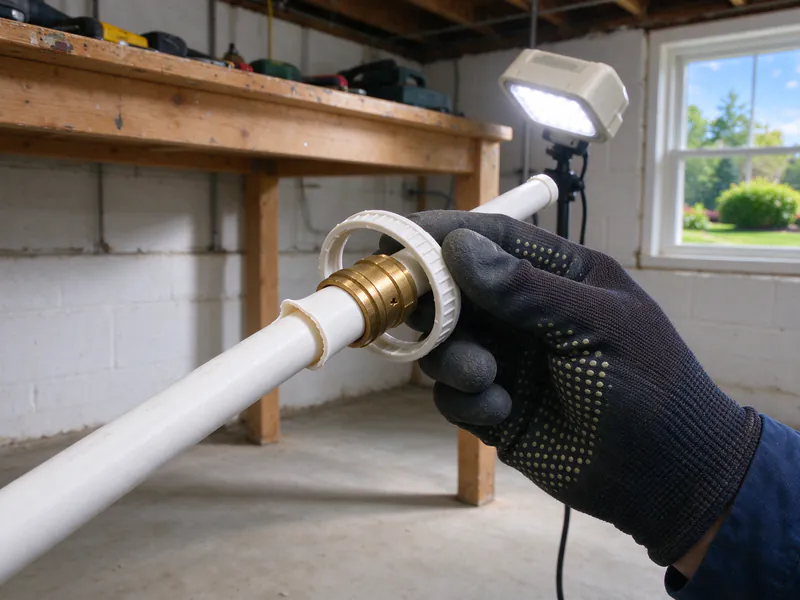
Expansion fittings are used with PEX-A. A tool stretches the end of the tube and a ring, the fitting slides in, and the tube shrinks back around it. The bore of the fitting stays close to the bore of the tube, so there is less restriction at each joint, which helps on long runs to an upstairs shower.
Crimp and clamp fittings
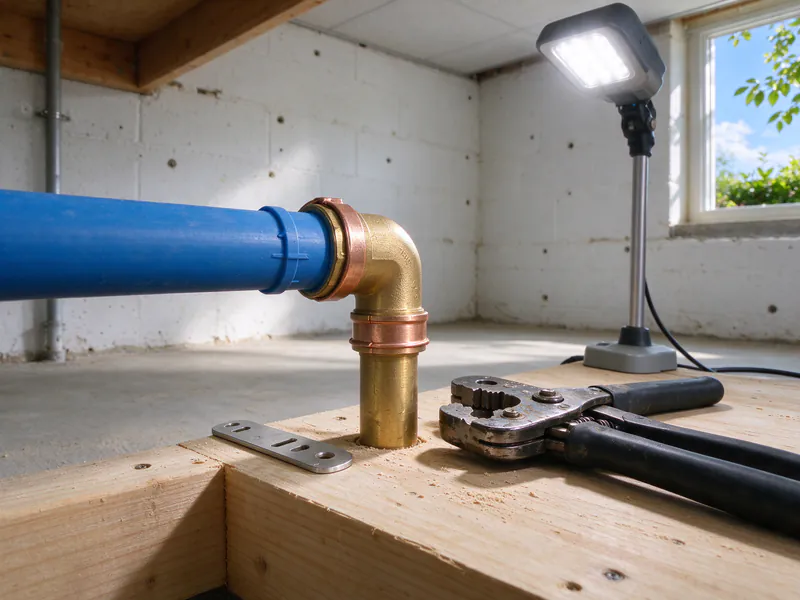
Crimp and clamp fittings are used with PEX-B, and with PEX-A in some systems. An insert goes inside the tube and a copper crimp ring or stainless clamp is squeezed around the outside. The insert narrows the bore slightly. A correctly sized ring, checked with a go/no-go gauge, is what makes the joint; a crimp made with a worn or uncalibrated tool is the usual weak point.
Push-fit fittings exist too. They are useful for a repair, but a whole system built from them puts many O-ring joints inside closed walls, so their use in a repipe should be stated in the scope rather than assumed.
Trunk-and-branch or a manifold
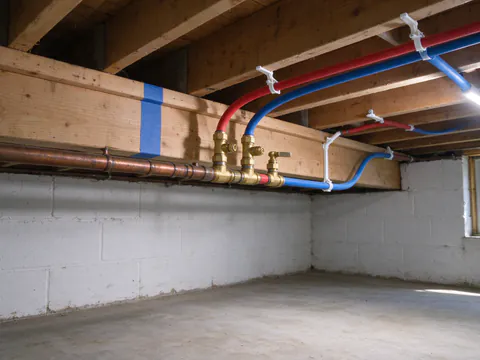
A trunk-and-branch layout copies the old system: a main line runs through the basement and tees off to each fixture group. It uses less tubing and suits compact houses. A home-run manifold gives each fixture its own line from a central panel of valves, which means fewer hidden fittings and a single place to shut off one sink, at the cost of much more tubing. Where a long run would make the hot water wait worse, hot water recirculation can be planned in at the same time. Some houses use a hybrid, with a small manifold serving each bathroom. The table above sets out the tradeoffs, and the manifold vs trunk-and-branch guide goes further, including hot water wait times.
Choosing between PEX layouts?
The walk-through shows where a manifold could go and how many lines it would need.
Expansion and support in a basement
PEX grows and shrinks noticeably with temperature, far more than copper. A hot line pulled tight between two fixed points can stress its fittings each time the water heater runs. The answer is slack: gentle loops on long runs, supports that hold the tube without pinching it, and room to move where it passes through a joist.
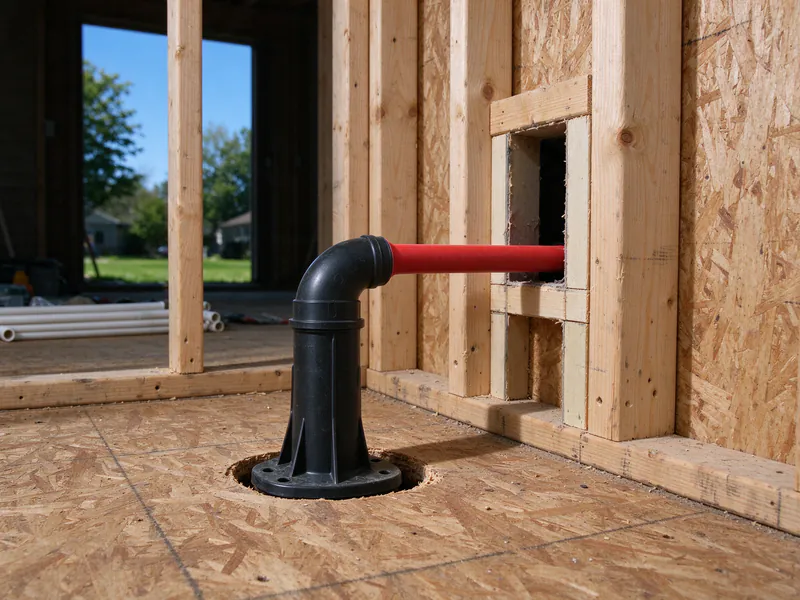
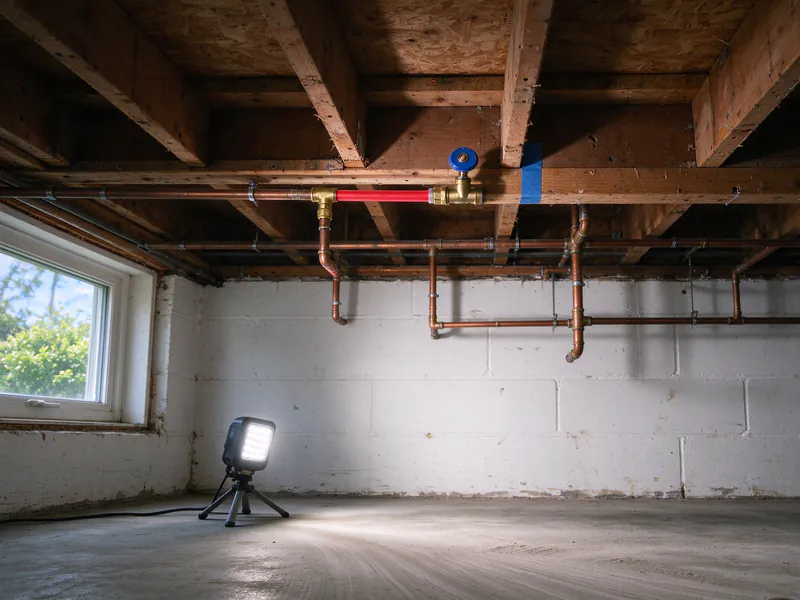
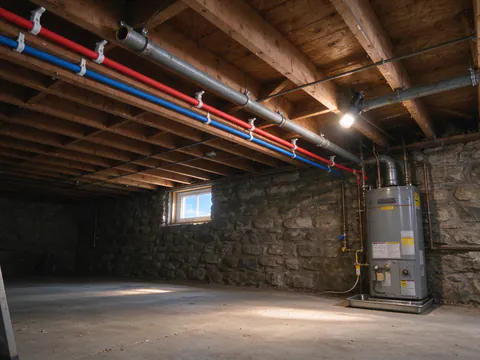
Support matters for the same reason. Tubing is hung at the spacing its maker lists, with plastic or coated hangers rather than bare metal straps that could cut it. Where PEX passes through a stud near the wall face, a steel plate keeps a drywall screw out of it. Where it turns up into a wall or out of a floor, a bend support holds the radius so the tube does not kink at the fitting. In a Columbus basement, where most new mains run along open joists, this is visible work an inspector can see and an owner can check.
Sunlight, heat and cold
PEX is damaged by ultraviolet light. Tubing stored outdoors or left exposed under a window or a skylight can degrade, so it is kept covered on site and is not run where daylight reaches it. It is also kept away from flue pipes, recessed lights and the first stretch of pipe above a gas water heater, where most makers call for a metal connector.
Cold is the Columbus concern. The airport station averages 103.2 nights a year at or below freezing, and the City’s building code sets a frost depth of 32 inches. Tubing can stretch when water freezes, which gives it more tolerance than copper, but fittings, valves and the hose bibb connection can still fail. Routes are drawn to keep lines inside the heated envelope and off rim joists, and the guide to freezing pipes in a Columbus winter covers what owners can do in a cold snap.
Where PEX meets the old system
Unless every pipe in the house is replaced, the new tubing meets something old: copper at a water heater, galvanized at the meter side, or brass at a valve. The pipe material guide shows how to tell them apart. Each meeting point gets a listed transition fitting. Where tubing meets galvanized steel, the old pipe near the joint is the next thing likely to fail, so the boundary is drawn where the steel ends or where it can be inspected. A partial repipe page covers how those boundaries are written down.
Removing metal pipe can also break an electrical bonding or grounding path that ran through it in an older house. That is electrical work, not plumbing, so the scope notes it and an electrician confirms the bond.
Cost, permit and the pressure test
A typical Columbus-area range for a whole-house PEX repipe is $4,000 to $12,000, set mainly by fixture count, stories, access and the number of openings, not by the tubing. Plastic pipe prices rose about 4 to 5% over a year in the Bureau of Labor Statistics producer price index while copper rose about 30%, which is part of why PEX usually comes in lower. The Columbus repipe cost guide breaks the price down.
Inside the City of Columbus, Building and Zoning Services issues the plumbing permit: $275 for a 1, 2 or 3 family home, with two inspections. Most suburbs issue their own permit after Franklin County Public Health reviews the plan, and the Columbus repiping permit guide sorts out which office covers which street. Before walls close, the new system is pressure tested and checked joint by joint, then flushed so cutover debris clears the aerators. Shutoffs, and the manifold if there is one, are labeled by fixture.