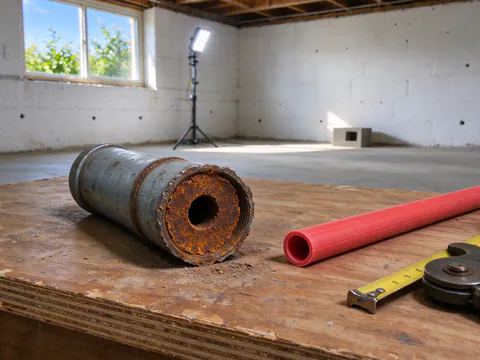
Rusty water usually comes from one of three places: the water heater, corroding galvanized steel pipe in the house, or disturbed sediment in the City’s mains. If only the hot water is rusty, suspect the heater. If both run brown first thing and then clear, suspect house pipe. If it starts suddenly and neighbors see it too, suspect main work.
Slate Repiping Columbus offers and manages galvanized pipe replacement and pipe repair in Columbus and nearby Franklin County communities, carried out by licensed and insured plumbing contractors. This guide shows how to tell the sources apart before anyone recommends replacing pipe.
The hot and cold test
This takes about ten minutes and needs two clear glasses.
- Start cold, at the lowest tap. In most Columbus houses that is a basement laundry sink or the tap nearest the meter. Fill a glass from the cold side as soon as you open it, then again after a minute or two.
- Then try hot. Fill a glass from a hot tap near the water heater, then from a hot tap on an upper floor.
- Compare, and note the timing. Was the first glass dark and the second clear? Did it happen after the water sat overnight or while you were away? Is it every morning, or did it start today?
- Ask a neighbor. If the house next door has the same color at the same time, the source is almost certainly outside.
| What you see | Most likely source | Next step |
|---|---|---|
| Hot only, cold is clear | Water heater: tank corrosion, anode rod, sediment | Have the heater checked and flushed |
| Hot and cold, dark at first, clears in a minute or two, worst after water sits | Galvanized steel pipe in the house | Identify the pipe and trace where it runs |
| Hot and cold, only at certain fixtures | One corroded branch | Check that branch; a partial repipe may fit |
| Sudden, lasting, neighbors see it too | City main work, hydrant flushing or a main break | Run cold water outside the house until clear; contact the City if it persists |
| Started after work on the service line or meter | Sediment loosened in the line or house pipe | Flush cold taps; clean aerators |
The test is a screening tool, not a diagnosis. Two sources can overlap: a house with galvanized pipe and an aging water heater can show both at once.
Finding the source
The water heater
When only hot water runs brown, the tank is the first suspect. Water heaters have a steel tank protected by a sacrificial anode rod. When the rod is spent, the tank starts to corrode. Sediment also collects in the bottom of the tank and can come out as rusty or cloudy hot water. A galvanized hot line out of the heater can add to it, since hot water speeds corrosion in steel pipe. Water heater work is separate from a repipe; replacing pipe will not fix a rusting tank.
Galvanized pipe in the house
When both hot and cold come out brown after sitting and then clear, the pipe in the house is the likely source. Galvanized steel corrodes from the inside once its zinc coating wears through, and rust builds on the pipe wall. Water that sits overnight picks up iron; the first draw carries it out. Over time the same corrosion narrows the pipe and cuts flow. The guide to identifying pipe material shows how to confirm galvanized with a magnet.
City main work
When rusty water arrives suddenly, lasts longer, and neighbors see it too, the cause is usually outside the house. Water main breaks, hydrant flushing, and construction on the street can stir up sediment that settles in the mains. Columbus is replacing lead and galvanized service lines street by street and runs water main projects across the city, and both kinds of work can disturb the water for a while. The City of Columbus lists rusty water as a common concern and explains its causes in its customer information.
The service line
A galvanized service line between the main and the meter can also shed rust. Inside Columbus, work on that line is handled through the City’s lead service line program or by a contractor holding a City of Columbus water contractor license; the water line replacement page explains the difference between that pipe and the pipe inside the house.
Rusty water that keeps coming back?
A walk-through traces the pipe from the meter and checks the water heater before anyone talks about replacement.
Is rusty water safe to drink?
The City of Columbus describes rusty water as an appearance problem that is usually not a health risk. Iron gives water its color and a metallic taste, stains sinks and laundry, and can clog aerators, but it is not what health rules focus on.
There is one exception worth knowing about. Galvanized pipe that sits, or sat, downstream of a lead service line can hold lead in its rusty scale and release it later, according to the US EPA. Rusty water in a house with old galvanized pipe and a known or suspected lead line is a reason to test for lead, not just to wait for the color to clear. The guide to whether galvanized pipes are safe explains the mechanism.
What to do right now
- Use cold water only until it clears, and run it at the lowest tap first.
- Hold off on laundry while the water is discolored; iron stains fabric.
- Avoid using hot water while City water is discolored, so sediment is not drawn into the water heater.
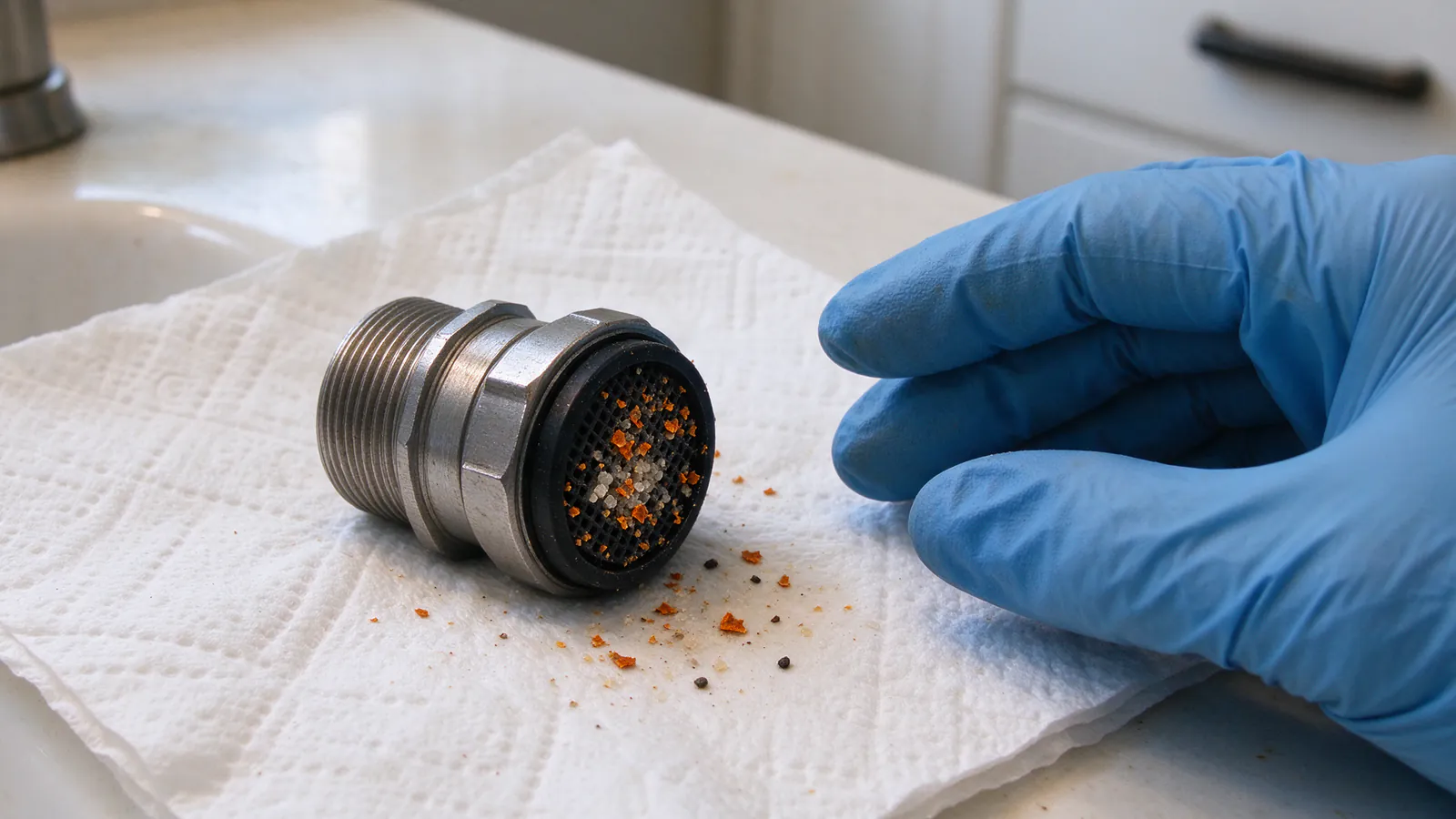
- Clean aerators and showerheads once the water clears; loosened rust collects there.
- Contact the City if discolored water from the street does not clear after several hours of running cold water.
When rusty water means it is time to repipe
Rust from the house pipe is a sign of corrosion that does not reverse. Flushing clears the water for a day; it does not restore the pipe. Rusty water points toward replacement when it comes from galvanized pipe in the house and:
- it appears at most fixtures, not just one,
- flow has dropped at several fixtures,
- threaded joints have started to leak, or
- the house had a lead service line upstream.
Where the rust comes from one branch, such as the hot line to a single bathroom, a partial repipe can replace that section. Where galvanized runs through the house, a whole-house repipe replaces it from the main shutoff out. The repipe vs repair guide explains where the line usually falls, and the low water pressure page covers the flow problems that often come with rust.