A whole-house repipe usually takes days, not weeks, and most of that time the water still runs. The exact number depends on the fixture count, the number of stories, whether there is an open basement, what the walls are made of and when the inspector can come. Nobody can give an honest figure for a house they have not seen. Slate Repiping Columbus offers and manages repipes across Columbus and nearby Franklin County communities, carried out by licensed and insured plumbing contractors, and the schedule is written into the scope after a walk-through.
What sets the length of a repipe
The schedule follows the same handful of facts that set the price. Each one changes how many hours go into routing pipe and how many openings have to be made and closed.
- Fixture count. Every sink, toilet, tub, shower, hose bibb and appliance is a connection to make and a line to run. A one-bath house has far fewer than a house with two and a half baths and a laundry upstairs.
- Stories. Pipe has to climb to each floor, and each climb usually means an opening. The Franklin County Auditor’s records show 44.3% of Columbus houses have two or more stories.
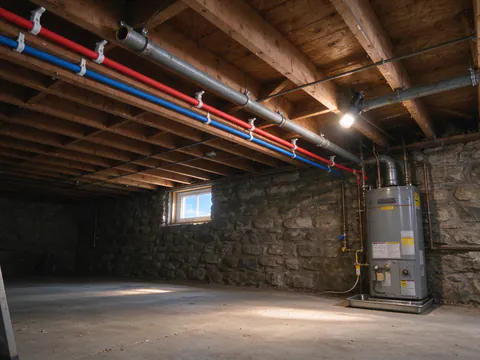
- Access below. In a house with a full basement, the main and most branches run along exposed joists, which is the quickest place to work. The Auditor records a full basement at 51.4% of Columbus dwelling cards, a crawlspace at 16.4% and no basement at 31.5%, a figure that includes condominiums.
- Walls. Drywall cuts and patches cleanly. Plaster over lath takes more care to open and more coats to close. See repiping an old house for how plaster changes the work.
- Material and layout. PEX bends around framing; copper needs a fitting at every turn. A manifold layout adds tubing but makes each run simpler.
- The permit office. Inspection timing is outside anyone’s control on the job, and the Columbus repiping permit guide covers which office comes out to which address.
Typical patterns by house type
These are patterns, not promises. They describe which houses tend to sit at the shorter or longer end, and why.
| House type | What tends to keep it shorter | What tends to make it longer |
|---|---|---|
| One-story ranch with a full basement | Main and branches run on open joists; short climbs to each fixture | A finished basement ceiling, a kitchen on an exterior wall |
| Two-story house with a basement | Basement routing for the main | A climb to each upstairs bath, ceilings below bathrooms, plaster |
| Double or two-to-four-unit building | Each unit can follow the same plan | Two households to schedule, shared mains across a party wall, more fixtures |
| House on a crawlspace | Lines can run under the floor | Tight, low working space; insulation and support to restore |
| House or condo with no basement | Short runs in a compact plan | Pipe through ceilings or attics, more openings in finished rooms |
Columbus has every one of these. In the 43224 ZIP around North Linden, 85.2% of the Auditor’s dwelling cards are one story, while in the 43205 ZIP around Olde Towne East, 86.3% are two or more stories, and about one card in five has two to four living units. A ranch in the first area and a brick double in the second can both be “a whole-house repipe” and still be very different jobs. The repiping guide covers how each is scoped.
How the water stays on: staged shutoffs
The water is not off for the length of the job. New lines are run alongside the old ones, which keep working until the new pipe is ready. Then each fixture group is switched over in a short shutoff: the kitchen, a bathroom, the laundry, the outside hose bibbs.
A few moments need the whole house off at once. Replacing the main shutoff valve near the meter is one, and connecting the new main to the water heater is another. These are planned for a set time so nobody is halfway through a shower. A typical aim is to restore water at the end of every working day, even if one fixture group stays capped overnight until its new line is finished.
In a double or small apartment building, every household needs to know when its water will be off. Some doubles have separate mains for each side; others share a main that branches across the party wall. The shutoff plan has to say which side loses water and when, and the double repiping page covers how those jobs are staged.
The City’s own service line work runs on a different clock. When Columbus replaces a lead or galvanized service line, the City says the water is typically off for about 6 to 8 hours. That is the buried line from the street, not the pipe inside the house, and the lead service line program guide explains where the two jobs meet.
Want a schedule for your house?
A walk-through sets the order of work, the shutoffs for each fixture group and where the inspection falls.
Where inspections fall in the schedule
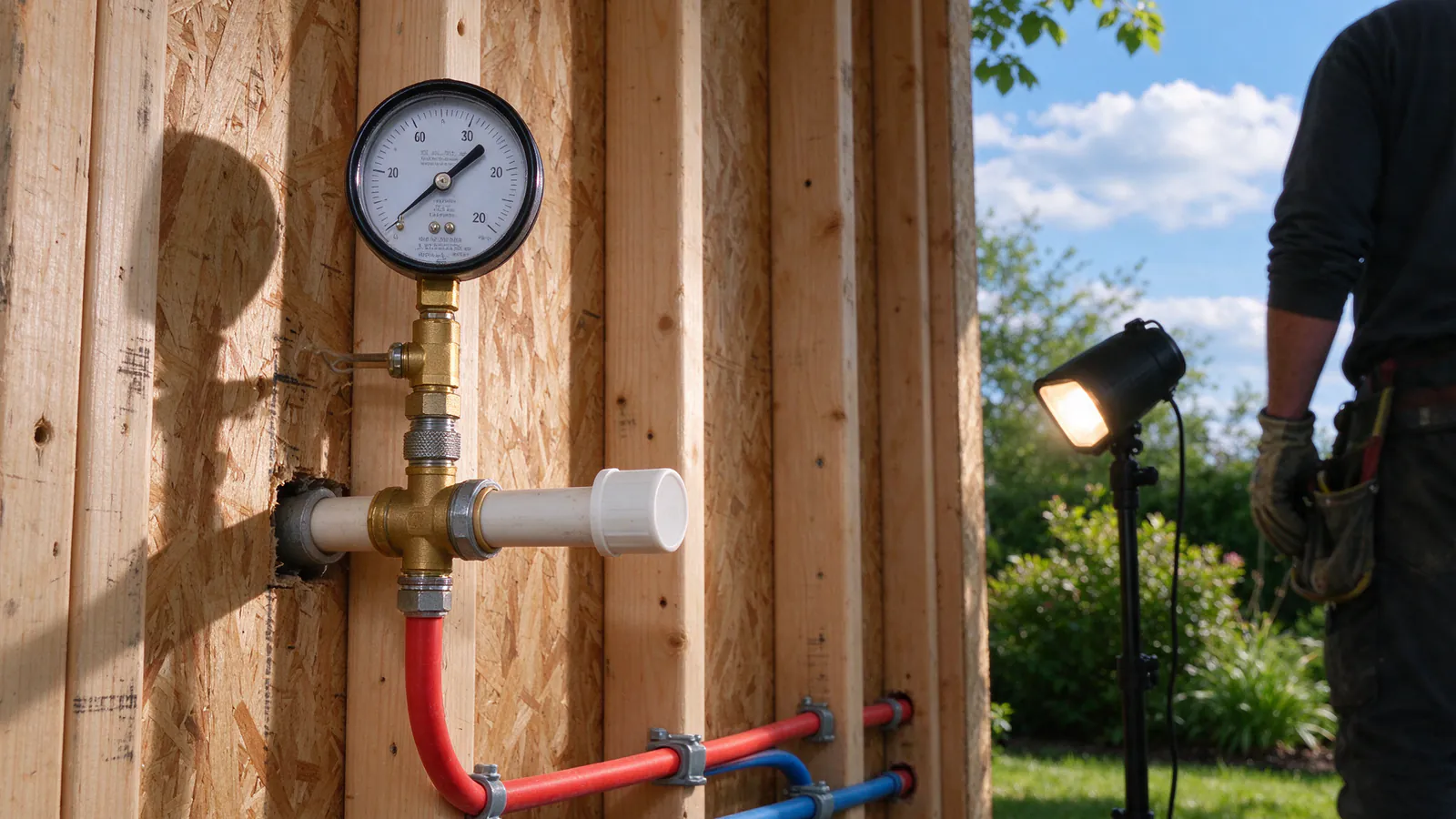
The inspection is a fixed point in the middle of the job. The inspector checks the new piping and the pressure test while the pipe is still visible, so walls and ceilings stay open until the inspection passes.
Inside Columbus, the plumbing permit from Building and Zoning Services costs $275 for a 1, 2 or 3 family home and includes two inspections. If the work is not ready when the inspector arrives, or something has to be corrected, an additional inspection trip costs $225. Planning the work so the pipe, the test and the access are ready on the scheduled day keeps both the calendar and the cost in line.
Many suburbs add a step before the job starts. In cities where Franklin County Public Health handles plumbing review and inspection, including Upper Arlington, Bexley, Grandview Heights, Whitehall, Westerville, Dublin, Hilliard, Gahanna and Reynoldsburg, plumbing permit applications since February 9, 2026 have to include the county’s plan review approval with a fixture count that matches the permit. That review happens before the permit is issued, so it belongs at the front of the schedule rather than the middle.
After the pipe: testing, flushing and patching
Once the new system is connected, it is pressure tested and flushed. Air spits from faucets for a while, and aerators and showerheads may catch loosened scale from old pipe that was disconnected, so they are cleaned after the flush.
Patching comes last and often takes longer than people expect. Drywall openings can be closed and taped quickly, but joint compound needs drying time between coats before it is sanded and painted. Plaster patches take more coats and more drying. Whether patching is part of the job at all is a scope question, covered in the guide to how invasive repiping is.
What can stretch the schedule
Some delays only show up once a wall is open.
- Hidden damage. A long-running leak can leave rotted subfloor or framing that needs repair before new pipe is supported.
- Older materials. In a house built before 1978, painted surfaces may contain lead, and the U.S. EPA requires lead-safe work practices for renovation that disturbs them. Where old pipe wrap in a basement may contain asbestos, it is tested before anyone cuts it.
- Scope changes. Finding galvanized pipe where copper was expected, or a polybutylene section nobody knew about, can add runs.
- Inspection dates. The inspector’s schedule is set by the office, not the job.
A good scope names these risks in advance and says how a change would be priced and approved.
Planning around other work
The schedule is easiest when the repipe is timed with other work that opens the same walls. A kitchen or bath remodel removes finishes anyway, and repiping during a renovation can mean fewer openings and less patching. A planned sale puts an inspector’s eyes on the pipe, and the guide to buying a house with old pipes covers that timing from the buyer’s side.
If you want a rough budget before you plan the calendar, the repiping cost estimator gives a planning range, and the whole-house repiping page lists what a full repipe includes. When you are ready, call Slate Repiping Columbus to set up a walk-through and a written schedule.