A house built before the Second World War hides its plumbing in thick plaster, masonry and framing that was never meant to be opened again. Slate Repiping Columbus plans and manages repipes for older houses across Columbus and the nearby Franklin County suburbs, with the routes worked out to keep plaster openings few. The work is carried out by licensed and insured plumbing contractors under the plumbing permit for the address.
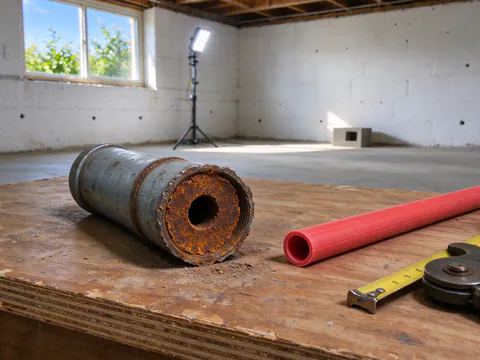
There is a lot of this housing in the city’s older rings. Census figures put 62.9% of homes in the 43205 ZIP around Olde Towne East and Driving Park before 1940, 56.1% in 43206 around German Village and more than 40% in Bexley and Grandview Heights. Most of these houses were plumbed in galvanized steel, many have copper repairs spliced in, and a few still have lead-soldered joints and old brass valves. The galvanized pipe replacement page covers the pipe itself; this page is about the house around it.
Reading an old house on the first visit
The walk-through in a prewar house spends as much time on the building as on the pipe. It starts in the basement at the main shutoff and the inside water meter, then follows each line up, noting where it disappears into a wall, which rooms stack above one another and where closets, pantries or a back stair might give a path between floors.
It also records the walls. There is no local record of how many Columbus houses still have plaster, so it is checked room by room: plaster on wood lath, plaster on metal lath, drywall from a past remodel, or tile. The age of painted surfaces matters too, since paint in a house built before 1978 may contain lead. The scope that comes out of the visit lists routes first and openings second.
Why prewar houses take more planning
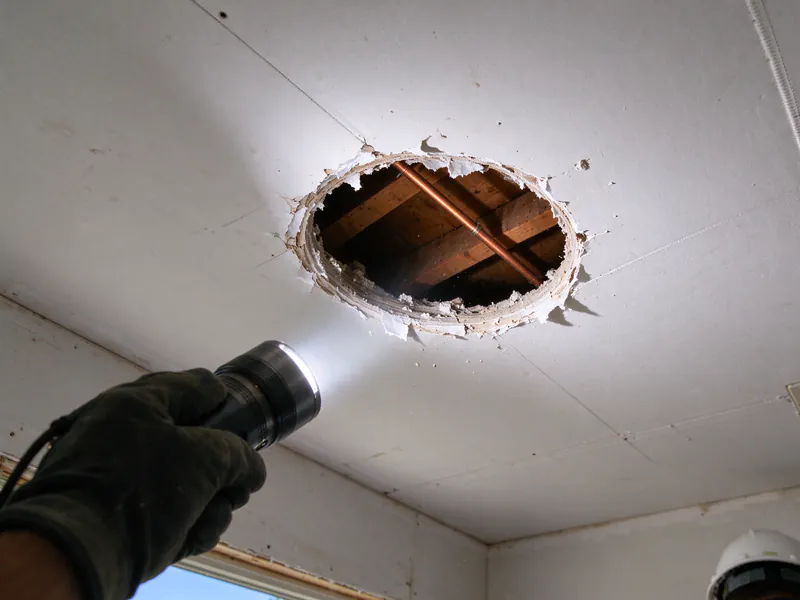
Plaster is harder to open cleanly than drywall. It cracks beyond the cut if the lath flexes, and patching it to match an old wall takes a plasterer’s skill. Exterior walls in brick houses are masonry, so pipe cannot run in them. Interior walls may carry decades of layered repairs, with abandoned pipe, old gas lines and knob-and-tube wiring sharing the same bays.
The old supply system itself is often patched: steel near the meter, copper where a past leak was fixed, steel again above, sometimes a length of flexible line under a sink. In a double, the same patchwork may serve two households, which the double repiping page covers. A whole-house repipe replaces that patchwork with one system, but the route has to be found around everything else the walls contain. The guide to how invasive repiping is sets out what owners should expect in general.
Routing through basements, closets and chases
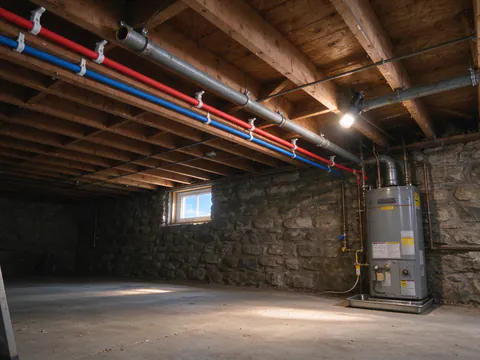
The basement carries the horizontal work. Among City parcels in 43205, 85.2% have a full basement on the County Auditor’s records, and 79.0% in 43206. The new main and the horizontal branches run along exposed joists, so the visible part of the old system is replaced without touching a finished surface.
The climb to the upper floors
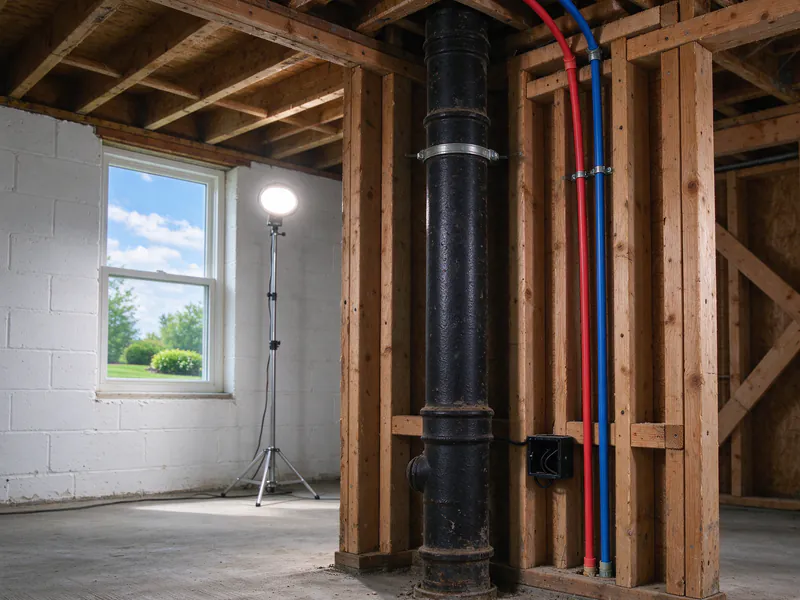
The hard part is going up. In 43205, 86.3% of homes have two or more stories, so most jobs include at least one vertical run to an upstairs bathroom. The usual paths are a closet directly below the bathroom, a chase beside the old cast iron soil stack, the back of a kitchen cabinet or a pantry. Each saves opening a finished wall in a main room. PEX is often chosen in these houses because it can be fished around a bend in a bay where copper would need an opening for each fitting, as the PEX repiping page explains.
Balloon-framed walls
Some older houses are balloon framed: the wall studs run continuously from the sill to the roof, without a plate at each floor. That leaves open bays from basement to attic, and tubing can sometimes be fished from below straight up to the second floor through one bay. The same open bays let fire travel between floors, so wherever new pipe passes through a floor or a plate, fireblocking is put back.
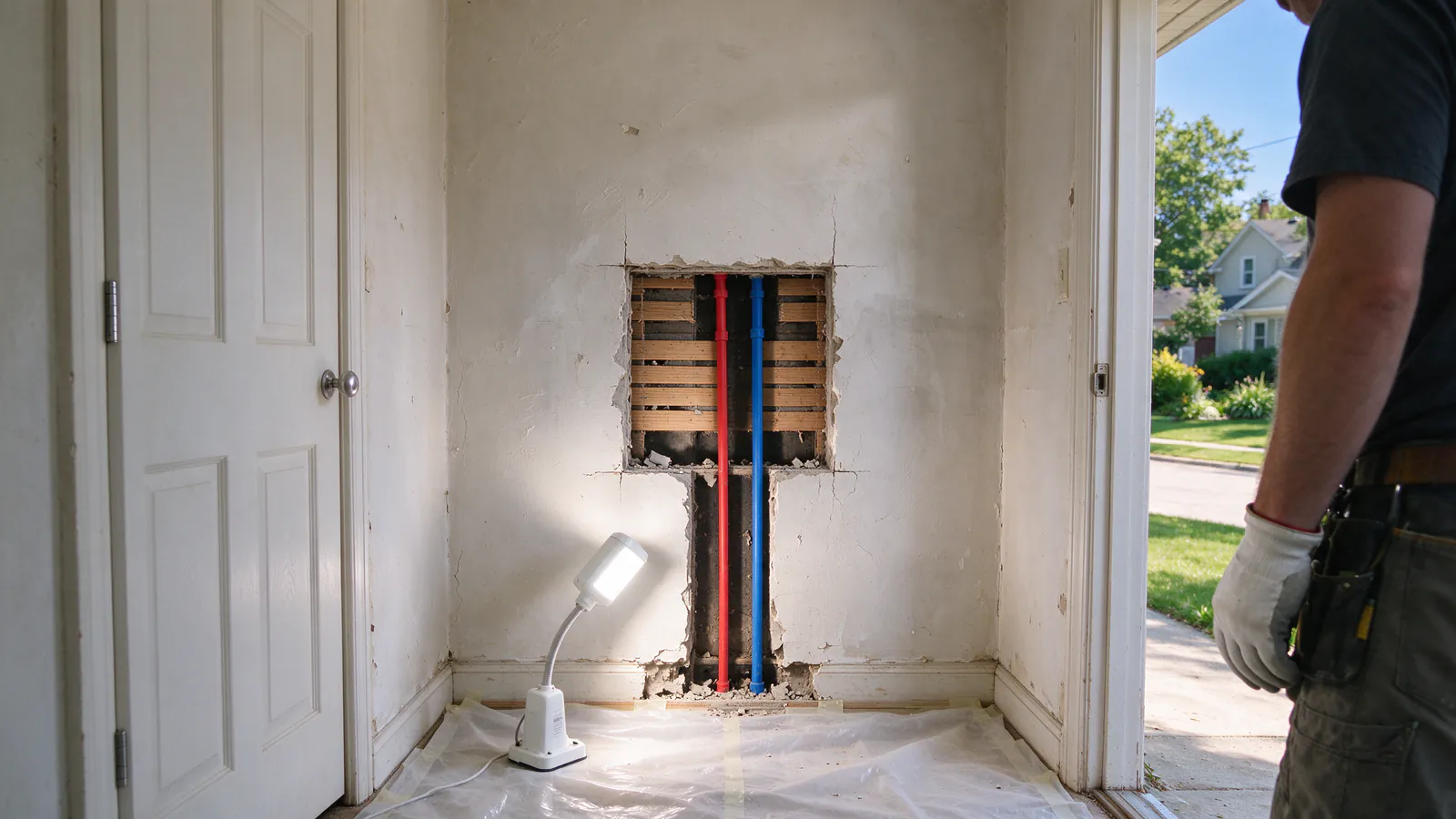
Prewar house, plaster walls?
The routes and the list of openings are worked out before any wall is touched.
Plaster and drywall patching
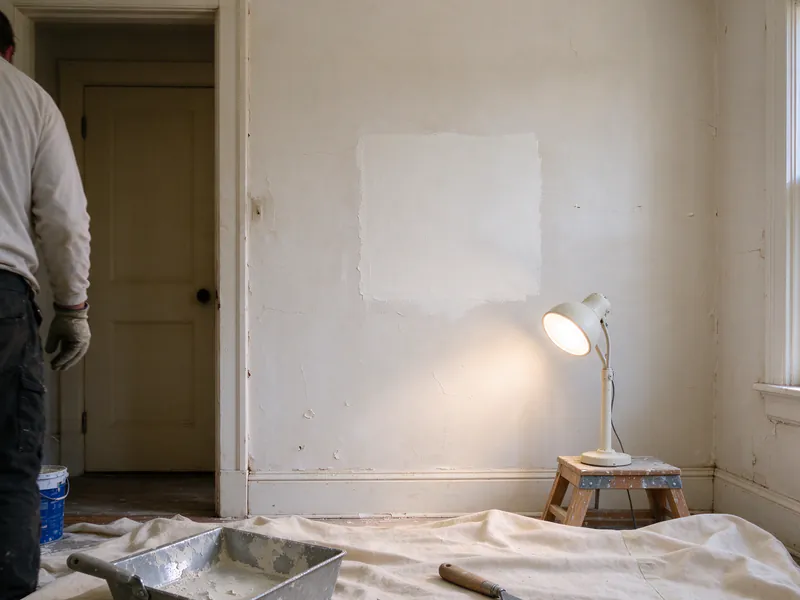
Every opening goes on a numbered list with its size, location and who closes it. Small openings in closets and behind fixtures are often closed with drywall or a removable access panel. Openings in plaster walls of main rooms are patched to match, which is skilled work and a real part of the price. A scope that says nothing about patching is not cheaper; it moves the cost to the owner later.
Where painted plaster in a pre-1978 house is cut, lead-safe work practices apply: containment, misting, careful cleanup. That adds time to each opening and is one more reason to keep them few.
What changes besides the pipe
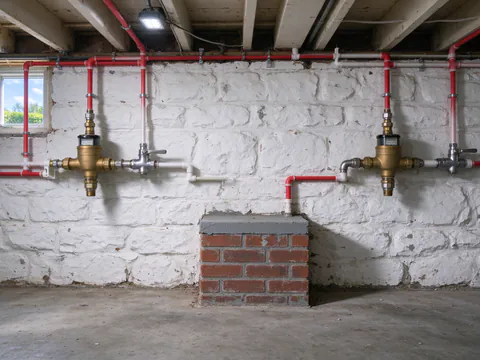
A repipe in an old house is a chance to bring the rest of the water system up to date. Old gate and globe valves, including the main shutoff, often seize or leak when turned after decades. They are replaced with quarter-turn valves. The Ohio Plumbing Code calls for shutoff valves at fixtures in 1, 2 and 3 family homes, except at tubs and showers, so sinks and toilets get their own stops.
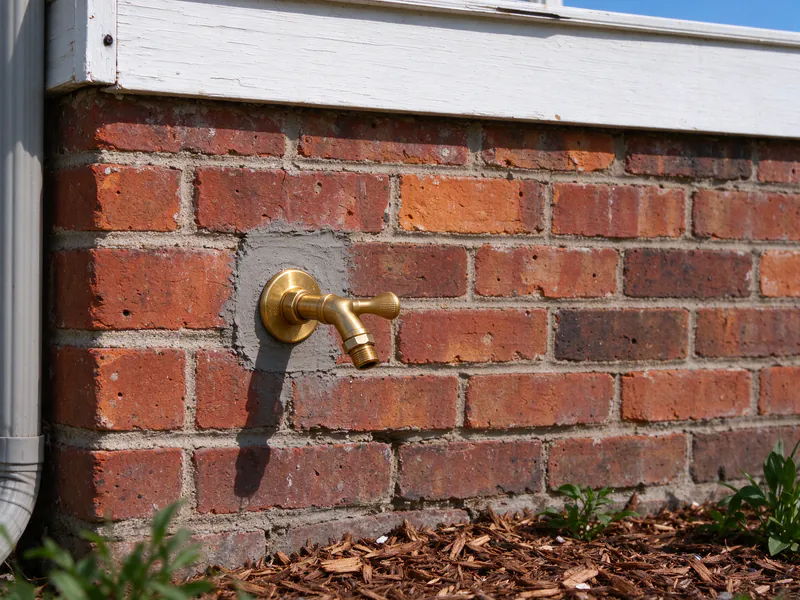
Brass fittings and valves could contain up to 8% lead until 2014, and lead solder was banned in home plumbing only in 1986, so older valves and copper joints are removed along with the steel. Hose bibbs that pass through cold brick walls are a common freeze point in a Columbus winter; frost-free versions are worth adding. Lines that ran inside exterior walls are moved inward. If the hot water wait has always been long, hot water recirculation can be planned in while the lines are open. A repipe does not include the drains: the guide to whether repiping includes drain pipes explains, and the cast iron stack replacement page covers the stack when it also needs work.
Historic districts, permits and testing
German Village, Victorian Village, Italian Village and other Columbus historic districts review exterior changes. No rule has been found that brings interior plumbing under that review, so an interior repipe goes through the regular plumbing permit. A new exterior hose bibb or a line through a front wall is worth checking before it goes into the scope.
Inside the City of Columbus, Building and Zoning Services issues the permit at $275 for a 1, 2 or 3 family home with two inspections. In Bexley, Grandview Heights and the other suburbs that contract with Franklin County Public Health, the city issues the permit and the County reviews and inspects. The new system is pressure tested before openings close, then flushed. The typical Columbus-area range for a whole-house repipe is $4,000 to $15,000 or more, and plaster, two stories and copper all push toward the upper part; the repipe cost guide shows how, and how long a repipe takes covers the schedule.