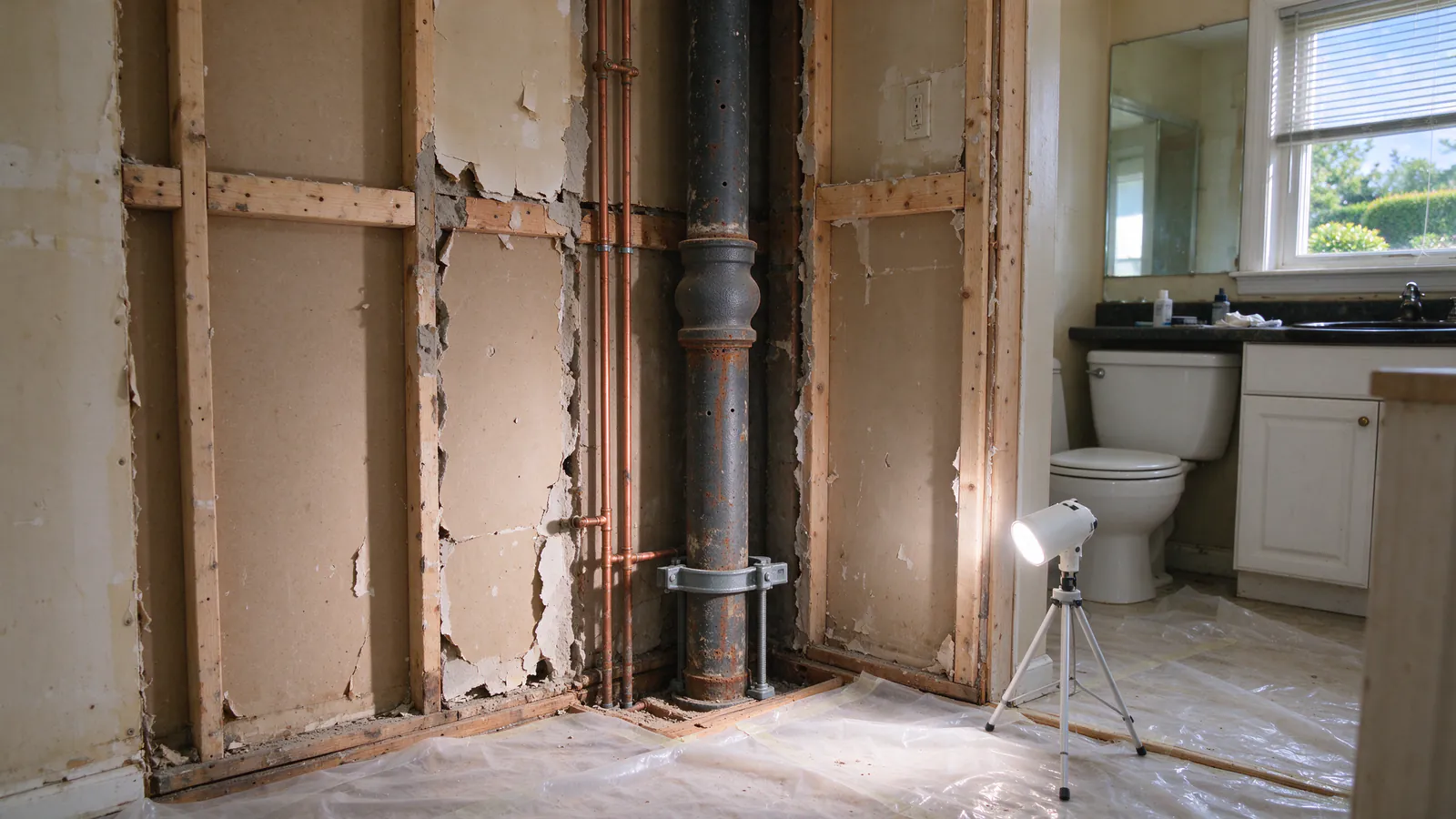
Slate Repiping Columbus offers and manages cast iron stack replacement in older houses across Columbus and nearby Franklin County communities. The stack is the large vertical pipe that carries waste from the toilets, tubs and sinks down to the building drain and vents sewer gas out through the roof. In houses from the early twentieth century it is usually cast iron, and it often sits inside the same walls as the old supply pipe. The work is carried out by licensed and insured plumbing contractors, under a plumbing permit, and it is a drain job: separate from the water supply pipe a whole-house repipe replaces.
Where cast iron stacks are found in Columbus
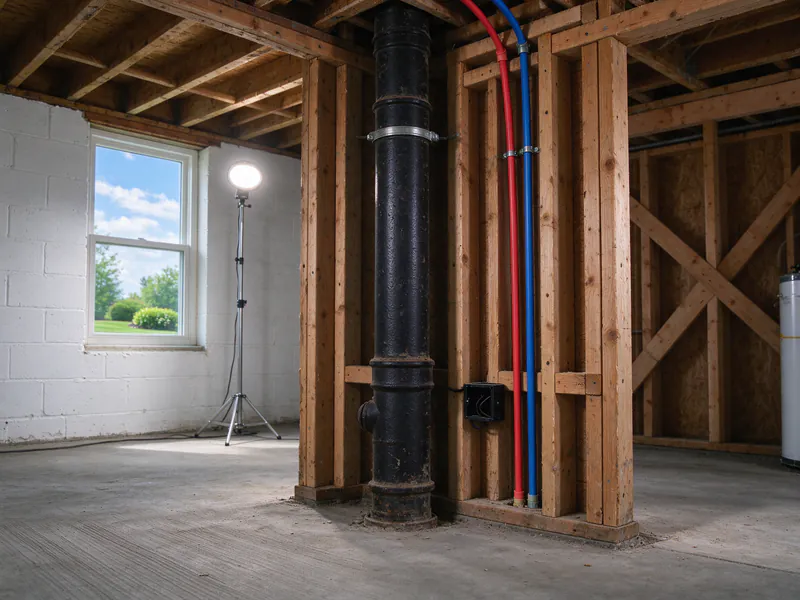
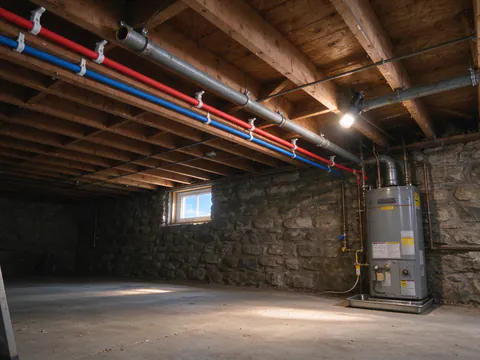
Cast iron stacks belong to the oldest housing, and Columbus’s oldest housing is concentrated. Census figures put 12.0% of the city’s homes as built in 1939 or earlier, but the share is 62.9% in the 43205 ZIP around Olde Towne East and Driving Park and 56.1% in 43206 around German Village. Bexley and Grandview Heights are each above 40%. Many of those houses are two stories over a basement, so the stack runs from the basement floor up through a first-floor wall, past the upstairs bath and out through the roof.
The old house repiping page covers what else those houses tend to have behind the plaster.
How cast iron stacks fail
Cast iron is strong and quiet, and much of it lasts for generations. When it fails, the cause is usually corrosion, and that can work from the inside, the outside or both. Several patterns show up in older stacks:
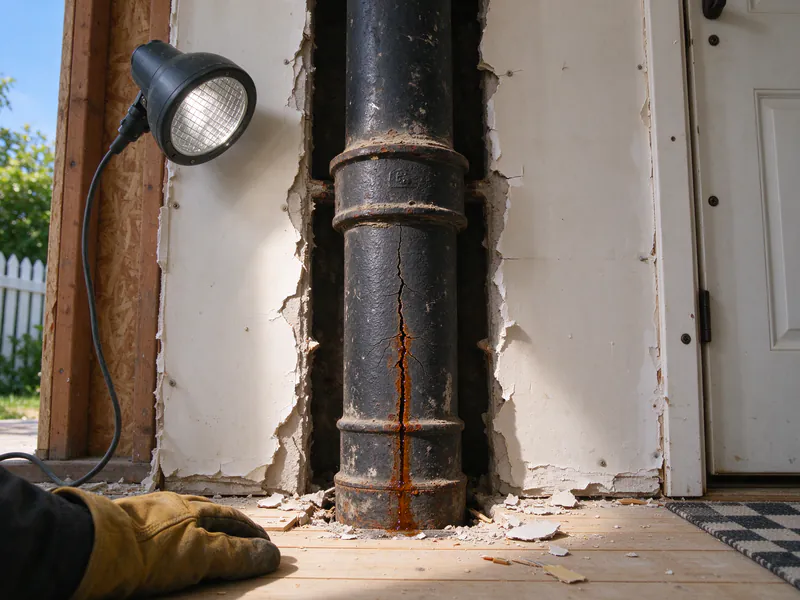
- Rust-through. Waste and the air in the pipe corrode the iron over decades. The wall thins, often at the bottom of horizontal sections and at fittings, until a weep or rust stain appears on the outside.
- Cracks. A long vertical crack on the stack, or a crack at a hub, can come from corrosion, settling, freezing or impact. Cracks may weep only when an upstairs fixture drains.
- Scale and roughness inside. Corrosion and buildup narrow the bore and catch paper and debris, which can slow drains on the floors above.
- Failing joints. Older cast iron was joined with packed oakum and poured lead at the hubs. Those joints can loosen or leak over time.
Symptoms point toward the stack but do not prove it. A slow drain can be a clogged trap or branch. A sewer gas smell can come from a dry trap in a basement floor drain, a failed toilet seal or a vent issue. A rust stain on a ceiling can be a supply leak rather than a drain leak, which is a job for water leak detection or pipe repair. The visible condition of the outside also does not show how thin the wall is inside, which is why a camera inspection is used where the decision depends on what is in the pipe.
Repair, section replacement or full replacement
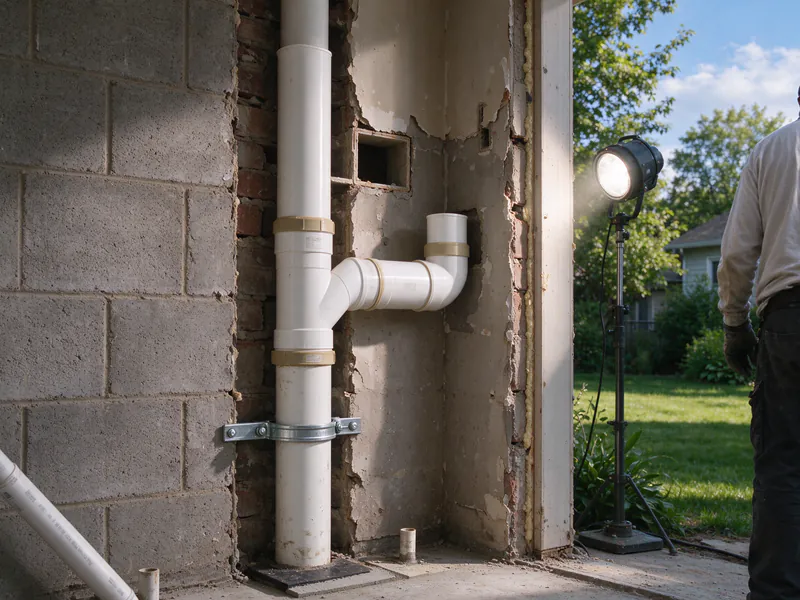
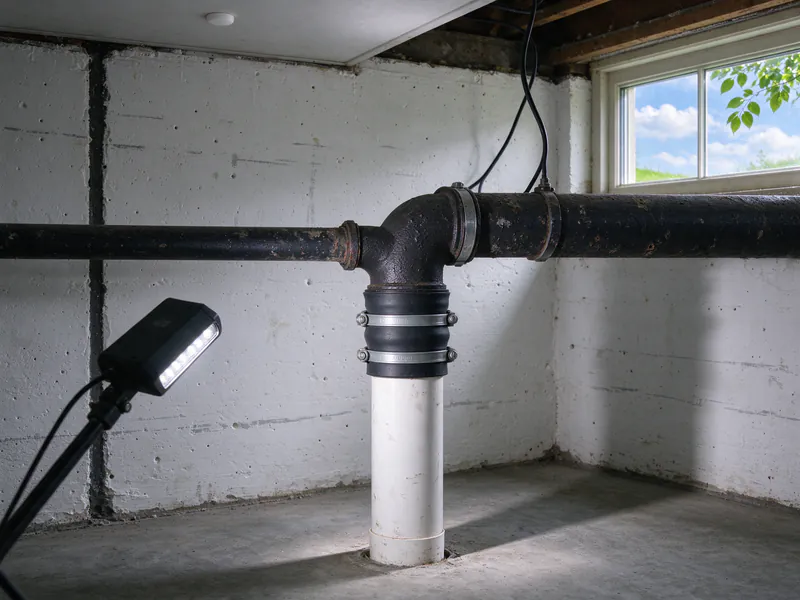
Not every problem calls for a new stack. A single leaking joint or one cracked length in an otherwise sound stack can often be cut out and replaced with a new section joined to the old iron with listed transition couplings. That fits when the rest of the stack has good wall thickness and the problem is local.
A full stack replacement fits when there is rust-through or cracking on more than one floor, when the camera shows heavy corrosion along the run, or when the walls are already open and the remaining iron is near the end of its service. Lining products exist for some drain pipe, but lining is not right for every stack: badly corroded, cracked or deformed pipe may not be suitable, and a liner follows the shape of the pipe it is in. The scope says which approach is being used and why.
PVC, ABS or new cast iron
The Ohio Plumbing Code is built on the 2021 International Plumbing Code, which lists cast iron, PVC and ABS for drain, waste and vent pipe. No one material is right for every house.
- PVC and ABS are light, quick to cut and join, and easier to carry through a finished house. They transmit more drain noise than cast iron, which matters where the stack runs beside a bedroom or living room.
- Cast iron is heavier and needs more support, but it is quieter and is sometimes chosen for that reason, or where the building or a fire separation calls for it.
Where new pipe meets old cast iron at the building drain or a branch, a listed transition coupling joins the two. The permit and the inspector confirm the material and the method for that building.
How the job runs
Cast iron is heavy, and an old stack is held up partly by the floors it passes through and by its own joints. Before it is cut, the stack is supported above and below the cut with clamps or blocking, so the iron above does not drop. Old sections are broken or cut into pieces that can be carried out.
The openings follow the stack: usually a strip of wall on each floor, a section of ceiling below an upstairs bath, and sometimes floor at the base. Each opening is listed in the scope with who closes it. While the stack is out, drains that tie into it cannot be used, so the schedule says which fixtures are off and when. The new stack goes in with fittings for each fixture branch, is connected to the building drain and the roof vent, and is tested with water or air before the walls close.
Walls opening for a repipe?
That is the moment to look at the stack. Find out whether it should be replaced while the openings already exist.
Doing it with a repipe
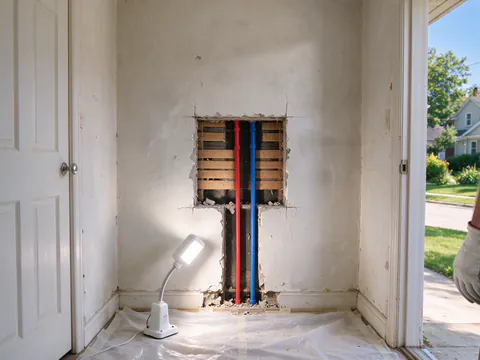
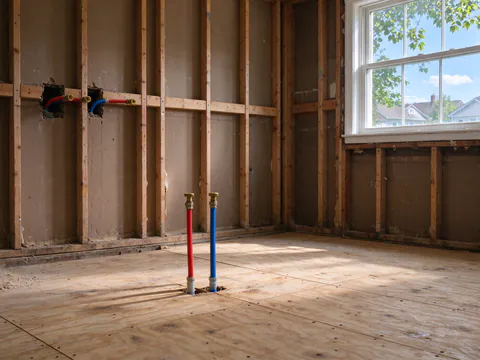
Cast iron stacks and old galvanized supply pipe often share the same wall cavities, especially in the bathroom wet wall of an older two-story house. When a galvanized pipe replacement or full repipe opens those walls, the stack is exposed for little extra disruption. Replacing it then means one set of openings and one round of patching rather than two. The guide to whether repiping includes drain pipes covers where the two scopes meet, and repiping during renovation covers planning both around a remodel. The guide to how invasive repiping is covers what the openings look like.
Permit and inspection
Replacing a stack is plumbing work that needs a permit. Inside the City of Columbus, Building and Zoning Services issues it; a plumbing permit for a 1, 2 or 3 family home costs $275 with two inspections. In many suburbs, including Bexley, Upper Arlington and Grandview Heights, the city issues the permit and Franklin County Public Health reviews the plan and inspects; since February 2026 those applications need the county’s plan review approval with a matching fixture count. The Columbus repiping permit guide covers which office handles which address.
What this service does not include
This service ends where the stack meets the building drain inside the house. The buried sewer lateral that runs from the foundation to the public sewer is outside the scope. If a camera shows problems past the foundation, that is a separate sewer line job. A buyer looking at a house with old pipes should note the difference: a stack, a building drain and a sewer lateral are three different repairs with three different prices.
What drives the price
There is no public price for cast iron stack replacement in Columbus. The cost depends on how many floors the stack runs through, whether a section or the full stack is replaced, the material, how many fixture branches tie in, how the walls are finished, whether the work shares openings with a repipe, and what restoration is included. A written scope lists each one.