Slate Repiping Columbus offers copper pipe repair for houses and small buildings across Columbus and nearby Franklin County communities, handling pinhole leaks and failed joints in copper water lines. Copper supply pipe was standard in Columbus from the middle of the last century onward, and a great deal of it is still in good shape. When it does leak, the repair is straightforward. What matters more is reading why it leaked, because that tells you whether the rest of the copper has years left or is following the same path. The work is carried out by licensed and insured plumbing contractors.
This page is for copper that is leaking now. The copper pinhole leak guide goes deeper into causes for anyone researching before a leak, and copper repiping covers replacing a copper system that has reached the end. For other materials, see pipe repair.
Pinholes and joint leaks are different failures
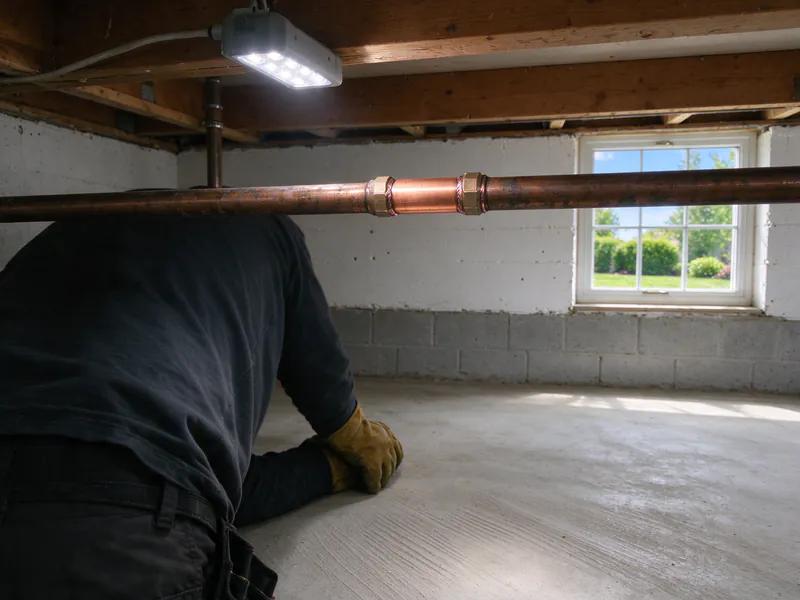
A joint leak in copper usually comes from how the joint was made. Solder that never flowed all the way around the fitting, a joint that was overheated until the flux burned, or a fitting that was not cleaned before soldering can all weep years later. The pipe on both sides may be in perfect condition, so the repair is a remade joint and the diagnosis ends there.
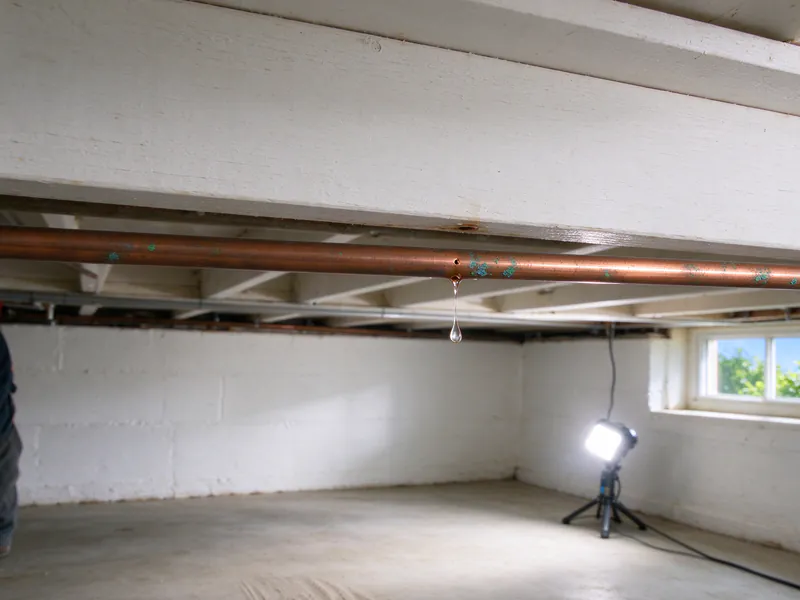
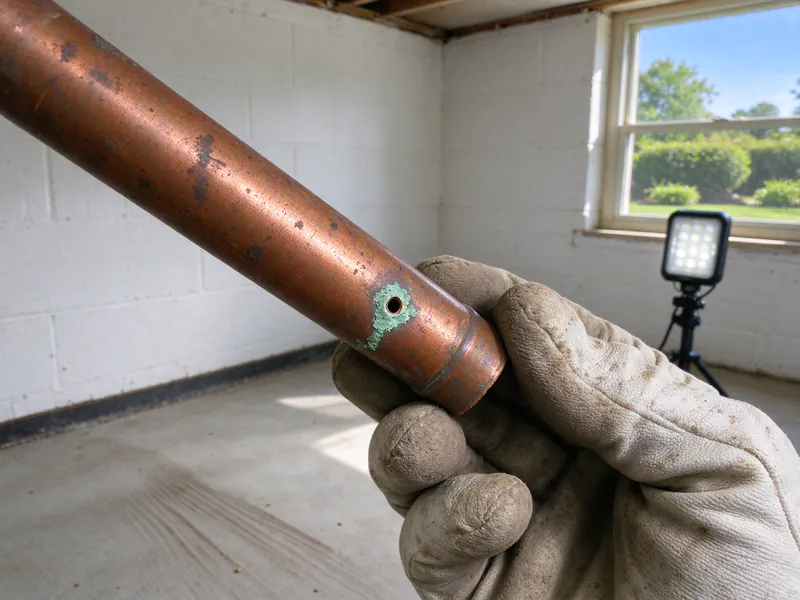
A pinhole is a hole worn through the pipe wall itself, often no bigger than a pencil point. It sprays a fine mist or wets a ceiling slowly, sometimes with a crust of green or blue mineral around it. Pinholes come from corrosion working from the inside out, and the question is what drove that corrosion in this spot. That is a question about the water, the flow and the installation, not just this one hole.
What causes copper to pinhole
No single cause explains every pinhole leak, and anyone who names one without looking at the pipe is guessing. The common mechanisms are:
Water chemistry
Water that is soft, acidic or high in certain dissolved minerals can attack copper’s protective inner layer. Columbus treats its water in ways that work against that. The City lime-softens it to a hardness of about 5.7 to 7.3 grains per gallon at its three plants, adjusts the pH to about 7.8, and adds zinc orthophosphate as a corrosion inhibitor, according to its water quality report. That treatment is designed to keep a protective film on pipe walls, which is one reason a single pinhole in a Columbus house does not prove the water is eating the system. Houses on private wells or on a water softener can have very different water at the tap, so it is worth knowing which applies. The Columbus water pressure and hard water guide covers what the City’s numbers mean for pipe.
Velocity
Water moving too quickly scours the inside of copper, especially just past elbows, tees and the outlet of a pump. This is called erosion corrosion, and it shows as smooth, horseshoe-shaped wear inside the pipe. It is most likely on hot water lines, in undersized pipe serving several fixtures, and on recirculation loops where a pump runs constantly. A pinhole a few inches downstream of a fitting, on a hot line, is a classic sign.
Flux and workmanship
Excess flux left inside a joint keeps reacting with the copper after the system fills, and pitting a short distance past a joint can be the result. Burrs left on the cut end of the tube, which disturb the flow, are another workmanship cause. These problems tend to repeat wherever the same installer worked, so a run with several joint-adjacent leaks says something about the whole installation.
Electrical current
In many houses the copper water pipe is part of the electrical grounding and bonding system. Stray current from a wiring fault, a poor ground or an appliance can travel on the pipe and accelerate corrosion at certain points. A plastic section added in an earlier repair can change where the current flows. Where several pinholes appear with no other explanation, having an electrician check grounding and bonding is a reasonable step, and any repair that cuts the pipe keeps the bond continuous with a jumper.
Second copper leak this year?
Keep the cut-out piece if you have it. Describe both leaks, and the read on the pipe comes with the repair.
How copper is repaired
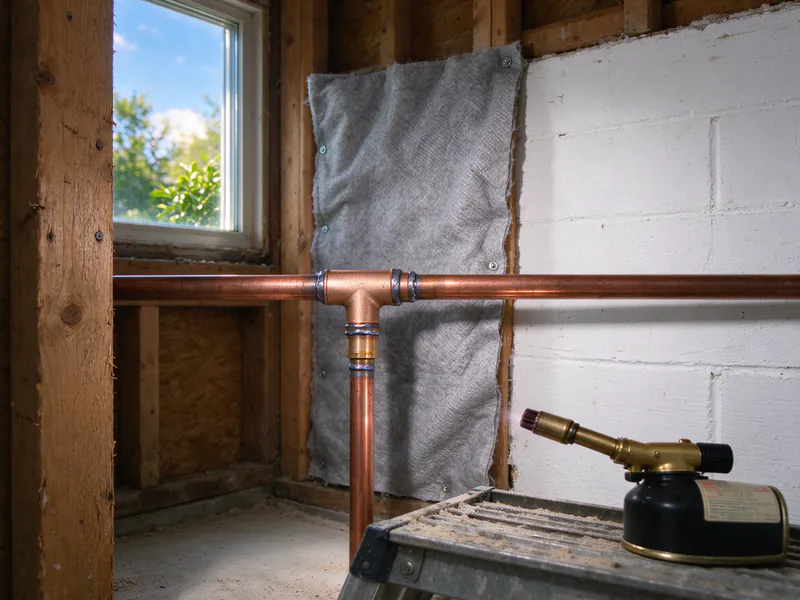
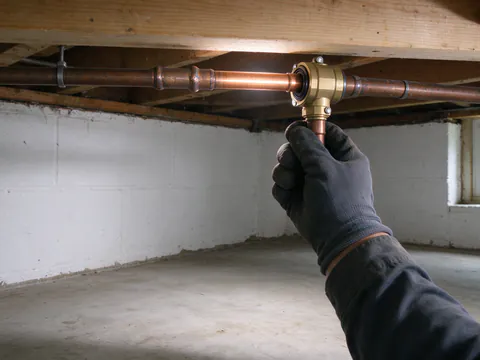
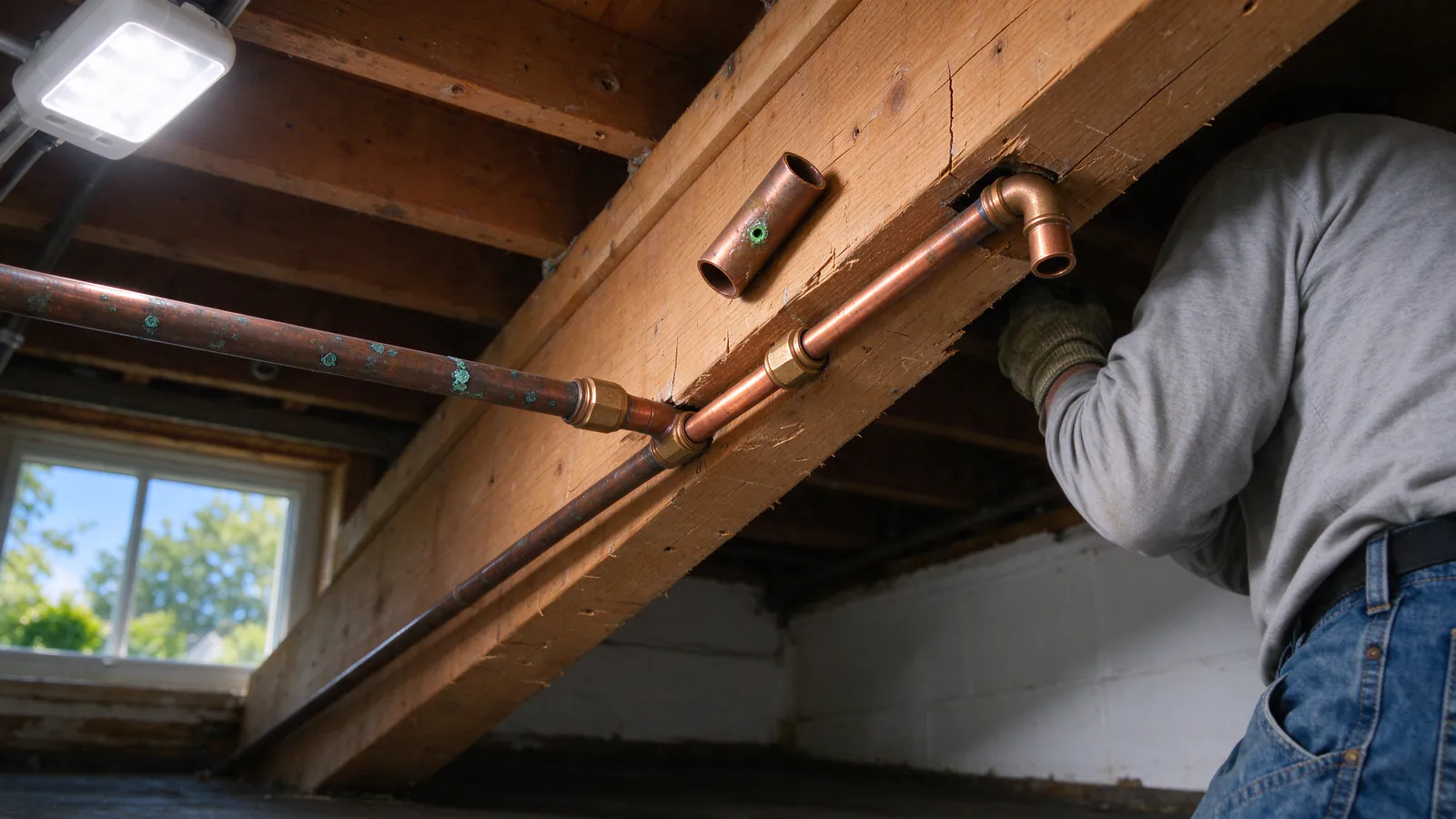
The leaking section is isolated and drained, then cut out back to copper with full wall thickness. New tube of the same type goes in, joined with lead-free solder or listed press fittings. Press fittings avoid an open flame, which helps in a closed joist bay, beside finished wood or near old wiring. Where the copper dates from before the 1986 lead solder ban, the repair removes old joints in the section it touches, though joints elsewhere in the house are unchanged.
The cut section is examined inside. Even, smooth copper with one localized flaw points toward an isolated cause. Pitting, green nodules or a wall that is visibly thinner near the hole suggests the same thing is happening along that run. That observation, with a photo, goes into the written note that comes with the repair.
Temporary fixes and when they fit
A repair clamp or a push-fit coupling can stop a leak and keep water on until the line can be properly fixed. They are reasonable in the short term, especially when the house is going to be repiped. A clamp sealed over a thin wall is not a long-term repair, though, because the wall around it keeps thinning.
When a pattern means replacement
A single pinhole with smooth pipe around it is a repair. These patterns point toward replacing the run or the system:
- Several pinholes on the same line within a year or two, especially on the hot side.
- Pitting inside every section that gets cut out, not just the one with the hole.
- Leaks spreading across the house rather than staying in one run.
- Thin-wall Type M copper in a house with repeat leaks, since there is less wall to lose.
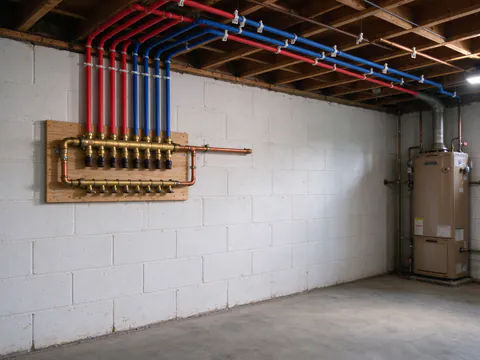
Where one run or one floor is clearly worse, partial repiping replaces that part and leaves sound copper alone. Where the whole system shows it, copper repiping or PEX repiping replaces it. The choice between them depends on routing, how much pipe stays exposed and preference, and the PEX vs copper guide sets out the tradeoffs. If the cause was velocity or electrical current, the new system should address it too: correctly sized lines, a properly set recirculation pump, a verified bond. Otherwise the new pipe can meet the same fate.
What the repair depends on
There is no flat price for a copper repair. It depends on where the leak is and what is around it: an exposed basement line is a short job, while a pinhole above a finished ceiling or inside a tiled wall needs an opening and a patch. The number of leaks, whether press fittings are needed near finishes, and whether a seized shutoff has to be replaced along the way all move it. The repipe vs repair guide compares the cost of repeated repairs with replacement, and the repiping assessment is a quick way to judge which side of that line a house is on.