Slate Repiping Columbus offers emergency pipe repair on the water supply side for houses and small buildings in Columbus and nearby Franklin County communities, and emergency calls are answered around the clock. An emergency here means water you cannot control: a pipe that split, water coming through a ceiling, a main shutoff that will not close, a broken water line, or a house with no water at all. The emergency visit stops the water and makes the house safe; the lasting fix may come then or be planned afterwards. The work is carried out by licensed and insured plumbing contractors.
No one can promise when a crew reaches a house, so the most important part of any emergency is what happens before anyone arrives. The steps below come first.
What counts as a supply-side emergency
The supply side is the pressurized system that brings clean water into the house and to every fixture. When it fails, water keeps coming until someone stops it, which is what makes it urgent. Drain backups and sewer problems are separate emergencies on a separate system.
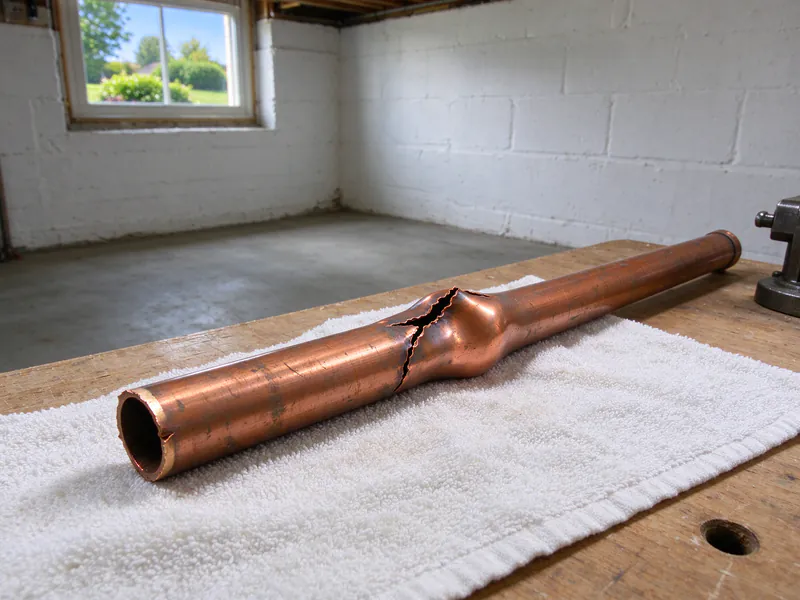
- A burst or frozen pipe. A split line runs at full pressure. Burst pipe repair covers freeze splits in detail.
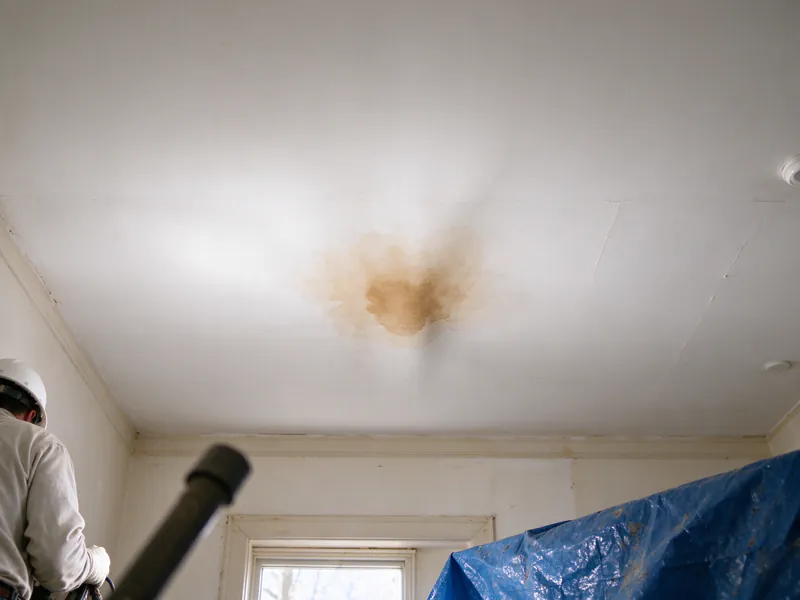
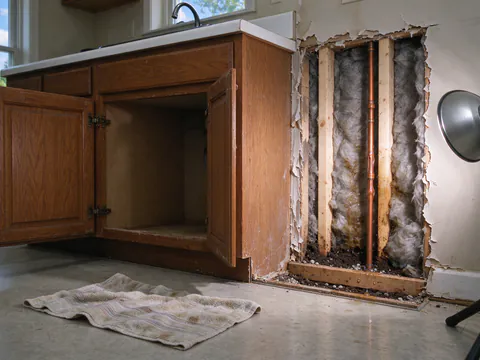
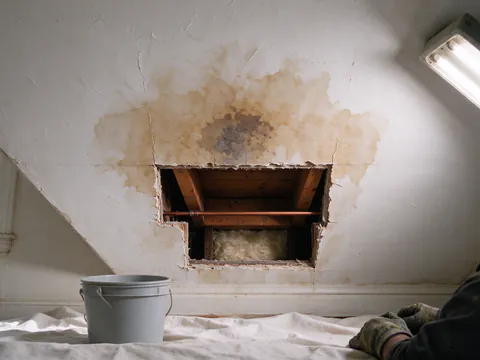
- An active leak through a ceiling or wall, especially one that is spreading or sagging the ceiling.
- A main shutoff that will not close while something is leaking, so the house cannot be isolated.
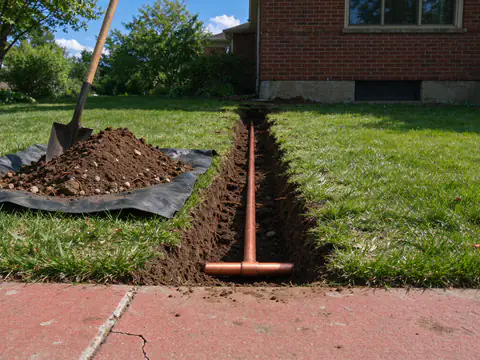
- A water line break on the buried service line, often shown by water pooling in the yard or seeping through the basement wall where the line enters.
- No water at all, which can be a frozen service line, a failed valve or a City outage.
- Water near electrical equipment, where the plumbing problem becomes a safety one.
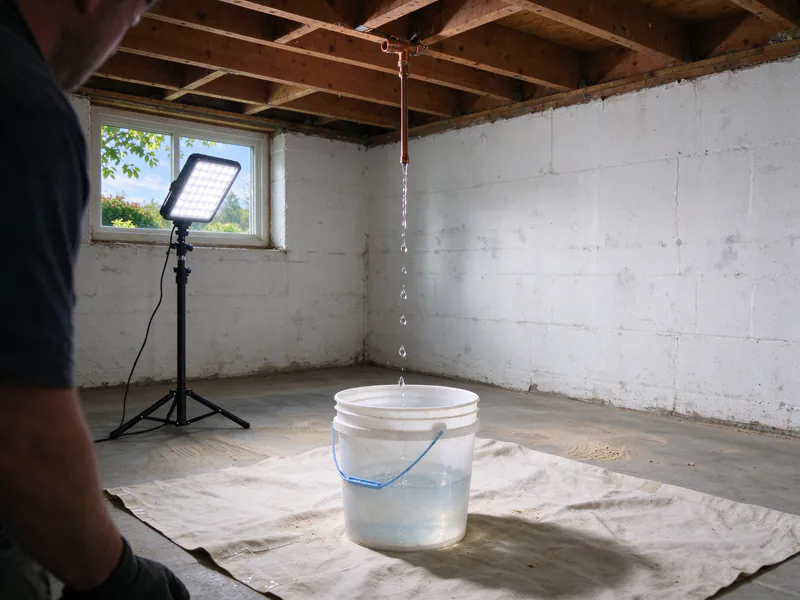
A slow drip that a bucket catches, or a fixture that will not shut off but can be closed at its own stop valve, can usually wait for a scheduled pipe repair.
The first minutes
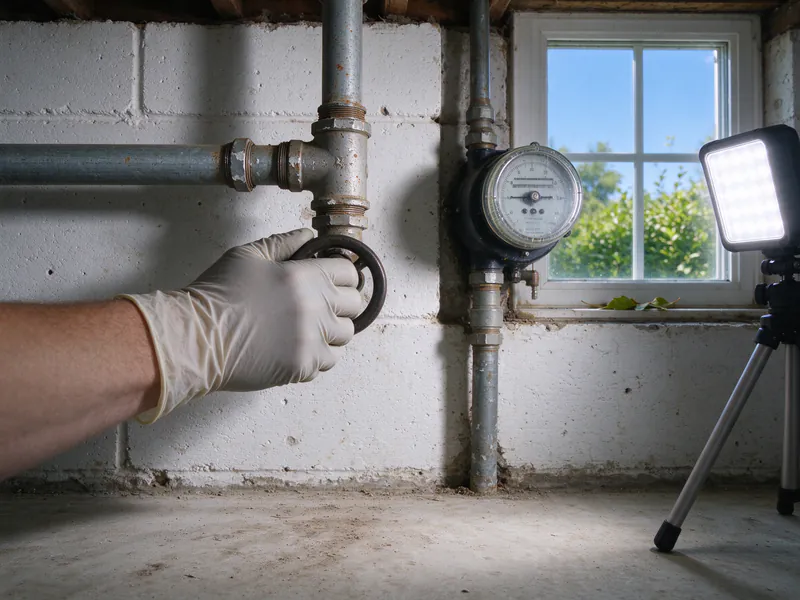
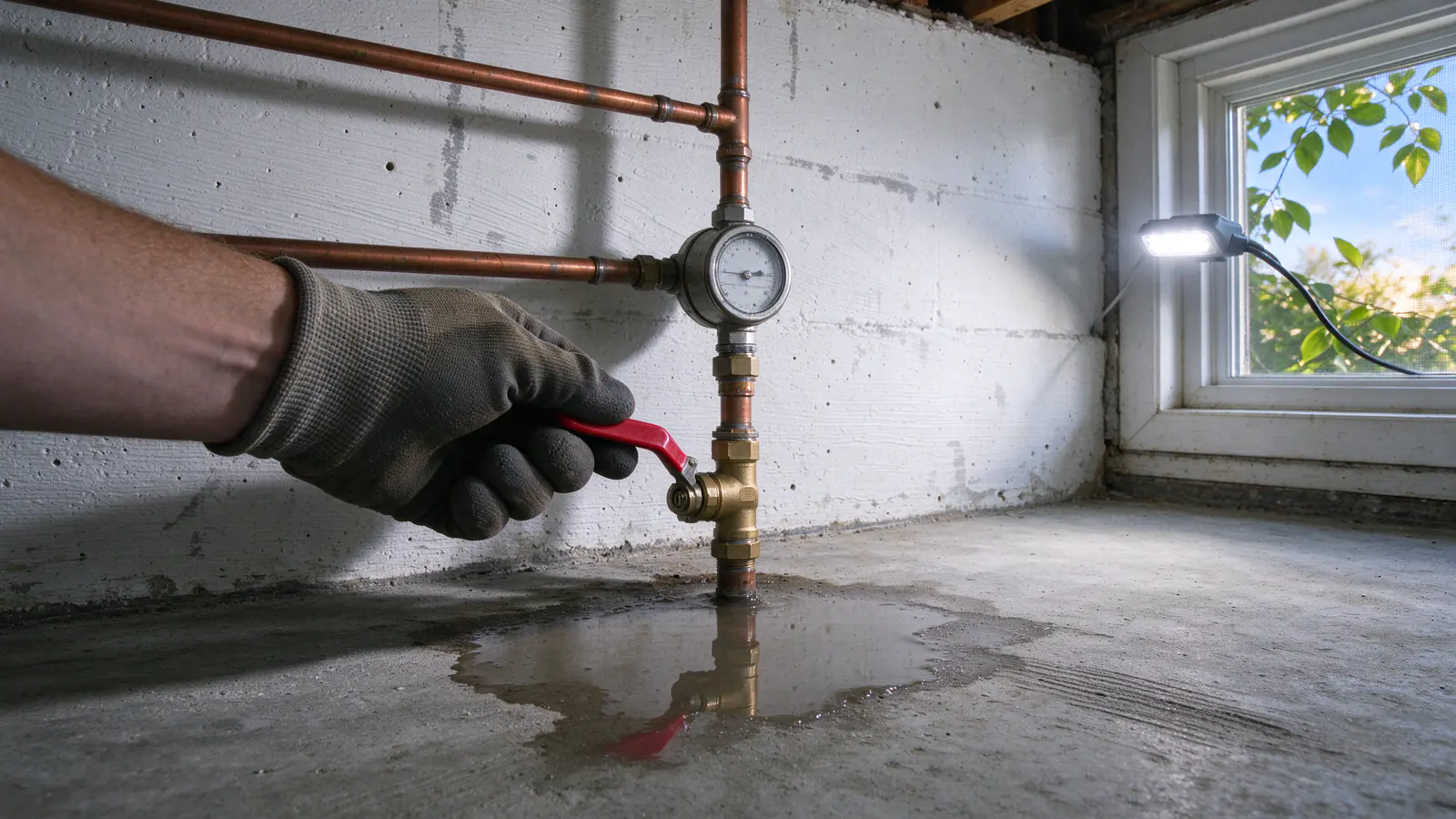
- Close the main shutoff. In most Columbus houses it is in the basement near the inside water meter, where the service line comes through the wall. A round handle turns clockwise; a lever turns a quarter turn across the pipe.
- If it will not move, stop. Forcing an old gate valve can snap the stem and make things worse. Close the fixture stop nearest the leak if there is one. The valve at the curb is part of the City’s service, so call Columbus Water & Power, or your suburb’s water department, about it.
- Open a low faucet in the basement to drain pressure from the lines.
- Protect the water heater. If hot water is draining out of the house, set a gas heater to pilot or vacation, or switch off an electric heater’s breaker from a dry spot.
- Photograph everything before cleanup: the failed pipe, the water and the damage. Keep the failed part.
- Call and say what failed, where, and whether electrical equipment or the water heater is involved.
The burst pipe guide goes through each of these in more depth.
What the emergency visit does
The first job is to stop the water for good and make the house safe. The damaged section is isolated, and where the system has working branch valves, water is restored to the rest of the house so a kitchen or bathroom still works overnight. If the main shutoff failed, replacing it is usually part of the visit, because a house that cannot be isolated is one leak away from the same emergency.
Temporary or permanent repair
Where a lasting repair can be made on the spot, it is: a split section of copper cut out and replaced, a failed fitting remade, a supply hose swapped. Some situations call for a temporary repair instead. The pipe around the failure may be rotting galvanized that will crack further if worked on, the leak may sit behind tile or a finished ceiling, or the right materials may not be practical in the middle of the night. A repair clamp, a cap on the damaged branch or a short bypass holds until the permanent repair is planned. The written note from the visit says plainly which kind of repair was made.
When an emergency becomes a repipe
An emergency often reveals the condition of the whole system. A galvanized line that broke when the main was turned, copper with its third pinhole, or a basement ceiling full of earlier patches says the pipe is failing as a system. Patching each emergency as it comes means more emergencies. The repipe vs repair guide helps weigh that, and a whole-house repipe or partial repipe is planned in daylight, with a permit, once the immediate problem is under control.
Water you can't stop?
Close the main if you can, keep clear of anything electrical, and call. Emergency calls are answered around the clock.
Service line breaks and no water
A break on the buried service line between the street and the house is a different job from a repair inside. In Columbus, work on the City’s service pipe requires a City of Columbus water contractor license, and that pipe is Type K copper from the main through the curb stop for lines 2 inches and smaller. Water line replacement covers the work.
If the leaking line is lead or galvanized, the City’s LEAP program can lend up to $10,000 at 0%, as a deferred lien, toward replacing it, but the three-party agreement has to be in place before work starts and the City does not reimburse work already finished. The Columbus lead service line program guide explains the program and the street-by-street replacement schedule.
No water at all can also mean a frozen service line or meter, a failed valve or a City outage. Checking with a neighbor and with Columbus Water & Power before assuming the problem is inside the house saves time.
Columbus winters and emergency calls
Freezing is the most common cause of supply-side emergencies here. By NOAA’s normals for the airport station, Columbus averages 103.2 nights a year at or below 32F and about 10 nights at or below 10F. The coldest spells, especially after a mild stretch or during a power or furnace outage, are when pipes in exterior walls, crawlspaces and unheated garages split. The freezing pipes post covers what to do before the cold arrives.
Insurance: sudden or gradual
Many homeowners policies treat a sudden and accidental event, such as a burst pipe or a fitting that lets go, differently from damage that built up over time from a slow leak or wear. The damage to the house may be covered while the pipe repair itself is not. Policies differ, so read yours or ask your agent; the homeowners insurance guide explains the general distinction. Photos taken before cleanup, the failed part and a written cause from the repair are what support a claim. Drying the structure and repairing finishes are separate work for a water damage restoration company, as the page on calling a plumber for water leaks explains.
What an emergency repair depends on
There is no flat price. The cost depends on what failed and where, how much has to open to reach it, the pipe material, whether a main shutoff has to be replaced, and whether the repair is temporary or permanent. Follow-up work, from a permanent repair to a repipe, is scoped and priced separately once the emergency is over.