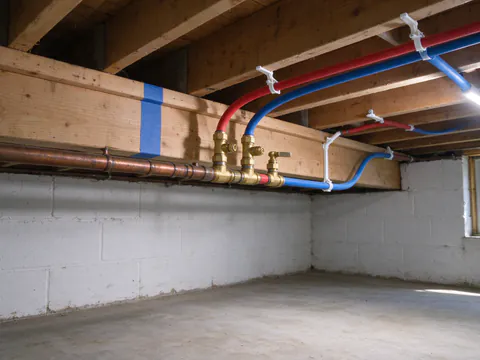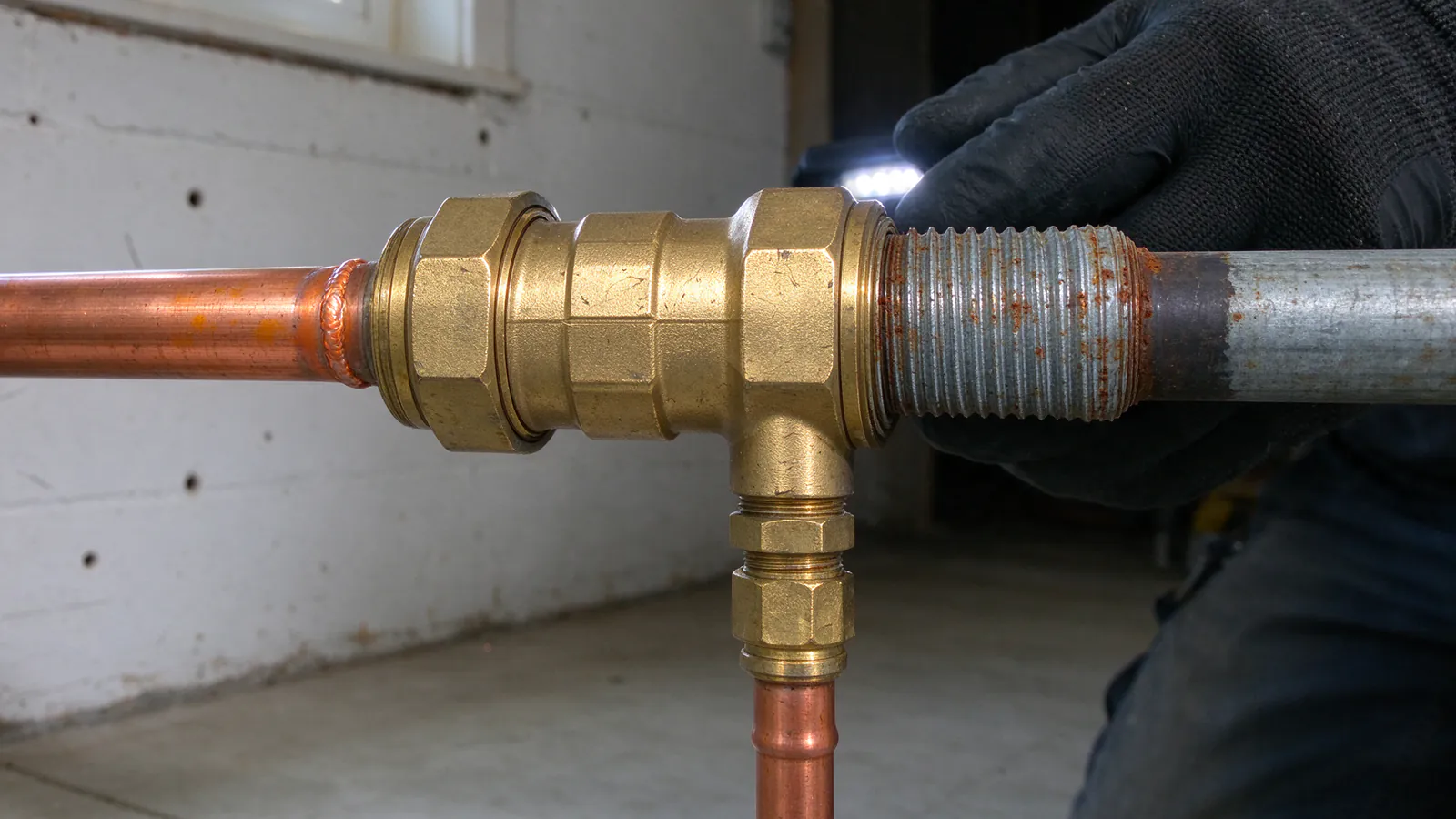
Repiping replaces old supply pipe with new pipe. Lining keeps the old pipe and coats its inside with epoxy. Lining can mean fewer openings, but it leaves the old joints, the old layout and any undersized lines in place. It is worth considering only for sound pipe with a coating listed for drinking water.
Slate Repiping Columbus offers and manages partial repiping and whole-house repiping in Columbus and nearby Franklin County communities, carried out by licensed and insured plumbing contractors. This guide explains how lining works, where it falls short, and the questions that separate a sound lining proposal from a weak one.
How epoxy lining works on supply pipe
Lining for water supply pipe follows the same basic steps whatever the brand. The water is shut off and the pipe is drained and dried, usually with heated, filtered air. The inside is then cleaned, typically by blowing abrasive through it to strip out scale and corrosion. Epoxy is blown or drawn through the clean pipe to coat the inside wall, then left to cure. Finally the system is flushed and put back in service.
Access points are usually at fixtures, valves and a few cut-in points rather than along every run, which is how lining avoids some wall openings. The whole system, or each section being lined, has to be out of service from the drying stage until the coating cures.
Drains are a different product
“Pipe lining” also describes cured-in-place liners for drain and sewer pipe, where a resin-soaked sleeve is pulled into the old pipe and hardened. That is drain work, not water supply work, and it has its own rules and trade-offs. The cast iron stack replacement page and the guide to whether repiping includes drain pipes cover the drain side.
Relining compared
| Question | Epoxy lining | Repiping |
|---|---|---|
| What is in the wall afterward | The old pipe, coated on the inside | New PEX or copper; old pipe removed or capped |
| Wall openings | Usually fewer | Planned openings, then patched |
| Pipe size and layout | Unchanged | Can be resized and rerouted |
| Old threaded or soldered joints | Stay in service, coated | Replaced |
| Lead held in old scale | Covered, if blasting removed it and coating is complete | Removed with the old pipe |
| How quality is checked | Depends on the process; ask how coverage is verified | Pressure test and inspection while pipe is visible |
| Future repairs | Cutting into lined pipe means working with the coating | Standard repairs on new pipe |
| Water off | Whole system or section until the coating cures | Off in stages as fixture groups switch over |
Costs depend on the house and the process, and this guide does not give a lining price. The Columbus repipe cost guide covers typical repipe ranges.
The limits of lining
It keeps the old pipe. The coating sits inside the existing pipe, so the pipe’s outer condition still matters. Threaded galvanized joints, where the wall is thinnest, remain the weak points. A pipe that has already lost much of its wall depends on a thin coating to hold water.
It keeps the old layout. Lining does not fix undersized lines, a trunk that starves an upstairs bath, long hot-water runs, or pipe in an exterior wall that freezes. A repipe can change all of these.
Coverage is hard to see. Tees, elbows, dead ends and the bottoms of fittings are where coverage is hardest to get right. Ask how it is checked. A camera inspection before and after gives evidence; a promise alone does not.
Scale and lead. Galvanized pipe that sat downstream of a lead service line can hold lead in its scale, according to the US EPA. Lining depends on blasting removing that scale and the coating sealing what is left. Replacement takes the old pipe and its scale out of the drinking-water path. The guide to whether galvanized pipes are safe explains the mechanism.
It does not reach the service line. Inside Columbus, the buried service line is handled through the City’s lead and galvanized line program or by a contractor with a City of Columbus water contractor license, whatever happens inside the house.
Offered lining and not sure?
A walk-through traces the pipe and shows which sections a partial repipe would replace instead.
Questions to ask before agreeing to lining
- Is the epoxy certified to NSF/ANSI 61 for drinking water? Ask for the listing, not just a brochure.
- Does the process follow a published standard practice? ASTM F2831 covers epoxy barrier coatings applied inside metal pressure pipe; ask which standard the process follows.
- How is the pipe prepared, and how is debris from blasting handled?
- How is coverage verified, especially at fittings? Ask for camera footage before and after.
- Is the system pressure tested after curing, and is the result written down?
- Does the job need a permit, and who inspects it? Inside Columbus that is Building and Zoning Services; in many suburbs it is the city with Franklin County Public Health review. The repiping permit guide explains who covers what.
- What happens when a lined pipe needs repair, and who stands behind the coating?
- Which parts of the system will not be lined, such as the water heater connections and fixture stops?
When lining may fit
Lining is most often considered where opening walls is unusually costly or disruptive and the pipe is basically sound: copper with a few pinholes in a layout that already delivers good flow, or a run in a hard-to-reach space where the pipe’s outside is in good shape. Even then, the questions above decide whether the specific product and process are worth it.
When repiping fits better
Repiping usually fits better when the pipe is galvanized with heavy scale, when flow is low at several fixtures, when lines are undersized or poorly routed, when leaks are spread across the system, or when lead may be held in old scale. It also fits when walls are opening anyway for a remodel.
A partial repipe as the middle path
Lining is often pitched as the alternative to a whole-house repipe. More often the real alternative is a partial repipe: replacing the run or bathroom group that is failing and leaving sound pipe alone. That keeps openings limited to the worst area while putting new pipe where it matters. The repipe vs repair guide explains how to set that boundary, and the guide to how invasive repiping is shows where openings usually land.